
|
A World of Aviation Knowledge
At Aviation Competence+, we provide a comprehensive platform for learning all aspects of aviation - whether you're a hobbyist, aspiring pilot, industry professional, or looking to refresh your skills. Our courses cover everything from basics to advanced topics, tailored to your goals. |

|
Welcome to Aviation Competence Plus
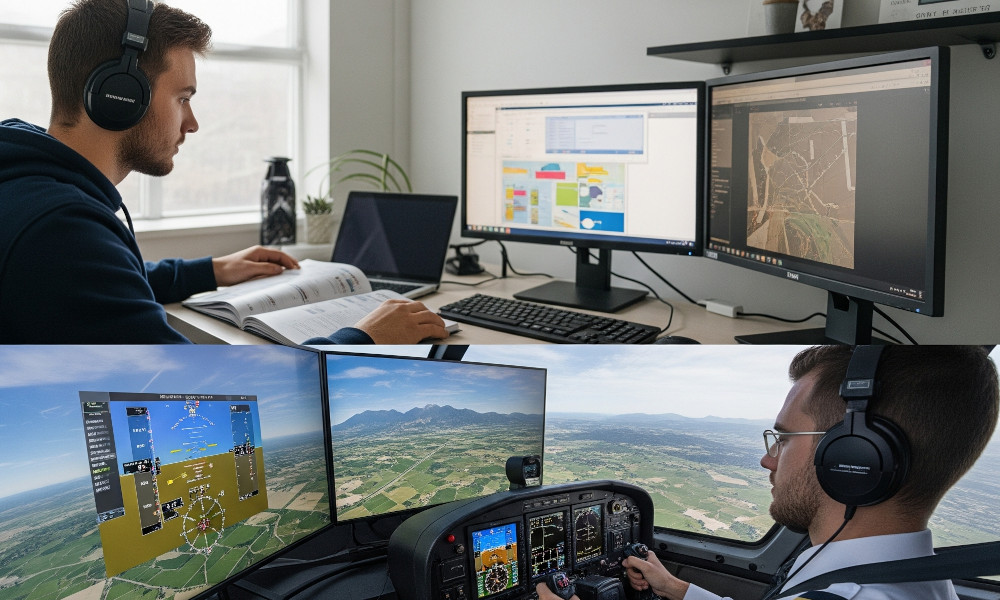
Your go-to platform for aviation learning - whether you're curious, training, starting a career, or updating your skills. Enjoy beginner to advanced courses, earn certificates, and take your aviation path to the next level. Subscribe, learn, and take off with us! |
|
Subscription Models - Full access. Full flexibility
Get access to all aviation training materials and decide for yourself: what to learn, when to learn, and how deep to go. No fixed paths. No unnecessary content. |

|
Your FREE Plan
Start your journey with our free plan! A variety of topics are waiting to be explored. |
Available Courses

The Dangerous Goods Competency Based Training provides a comprehensive introduction to the handling and transportation of dangerous goods in compliance with IATA, ICAO, and EU regulations. Participants will learn about hazard classification, packaging, labeling, and documentation requirements, as well as legal frameworks and safety measures.
The training covers risk assessment, regulatory responsibilities, and incident reporting while emphasizing competency-based learning. Special focus is given to hidden dangers, undeclared goods, and lithium battery safety. Ideal for airline staff, cargo handlers, and aviation professionals, this course ensures safe and compliant operations in air transport.
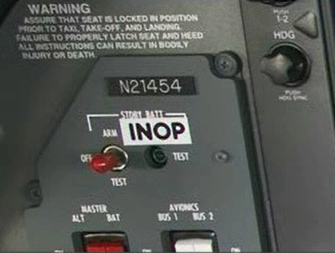
This online training provides an insight into the Minimum Equipment List (MEL), which is a document that lists the equipment that may be temporarily inoperative under certain conditions at the commencement of flight. The MEL is prepared by the operator for their own particular aircraft based on the Master Minimum Equipment List (MMEL), taking into account specific variables such as operating environment, route structure, and geographic location.
The student learns how to identify the minimum equipment and conditions needed to safely operate an aircraft having inoperative equipment, with the goal of minimizing continued operation with inoperative equipment. The course also covers the Configuration Deviation List (CDL), which has the character of a supplement to operational limitations and indicates operation of the aircraft without certain secondary airframe and engine parts is possible.

Dieser Airside Safety eLearning Kurs vermittelt grundlegendes Wissen über Gefahren, Risiken und Sicherheitsanforderungen im Airport Bereich. Er richtet sich an Personen, die das Airside-Management übernehmen, die Einhaltung von Vorschriften überwachen oder direkt im luftseitigen Bereich arbeiten, um ein solides Verständnis der Sicherheitsprotokolle zu gewährleisten.
Der Kurs basiert auf europäischen Vorschriften und ICAO-Empfehlungen und wird durch branchenweite Best Practices ergänzt, um die betriebliche Sicherheit zu verbessern. Die Teilnehmer lernen unter anderem die Bestandteile eines Flughafens, Sicherheitsbeschränkungen, Gefahrenquellen, persönliche Schutzmaßnahmen sowie Notfallverfahren kennen und erwerben die erforderlichen Fähigkeiten, um in dieser risikoreichen Umgebung sicher und effizient zu arbeiten.
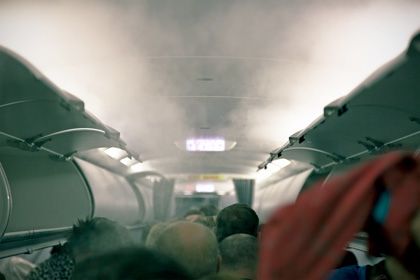
The Fire Fighting and Smoke Removal course is designed for Flight and Cabin Crew and provides the theoretical knowledge required by EASA regulation PART-ORO. This course also aims to train on the causes and preventive measures for smoke and smell development in the cockpit, ensuring crews are equipped to handle such emergencies effectively.
The course covers general aspects of smoke and fire onboard, including fire classification, development, and extinguishing methods. It explores fire extinguishing agents, the operation of fire extinguishers, wire degradation, and the use of circuit breakers. Additionally, the course emphasizes communication protocols and general procedures for managing fire-related emergencies and smoke removal in the aircraft.


The cold season is approaching. Make sure you are prepared for Winter Operation, i.e. operating in snow, frost and icing conditions. This FREE "Get Ready for the Winter Season" course provides you with a short overview on the most important topics you need to know.
To get all details and to learn more, enroll yourself to one of our regular Winter Operations trainings in our shop.
This multimedia-based Airside Safety eLearning course provides essential knowledge on hazards, risks, and safety requirements in the airside environment. It is designed for those managing, monitoring compliance, or working airside, ensuring a solid understanding of safety protocols.
The online course is based on European regulations and ICAO recommendations, supplemented by industry ‘best practice’ to enhance operational safety. Participants will learn about the components of an airport, security restrictions, hazards, personal safety measures or emergency procedures, equipping them with the skills to work safely and efficiently in this high-risk environment.

This course focuses on the effects and risks associated with alcohol and drug use. Enhance your understanding of alcohol and drug use with this comprehensive course. Learn about the effects of alcohol, including intoxication, metabolism, and long-term health risks.
Understand the dangers of self-medication, side effects of over-the-counter drugs, and the impact on mental and physical health. This course covers alcoholism as a disease, treatment options, and responsible consumption. Ideal for pilots, healthcare professionals, and safety officers, it highlights the impact of alcohol and drugs on performance and decision-making.
Dieser Airside Safety eLearning Kurs vermittelt grundlegendes Wissen über Gefahren, Risiken und Sicherheitsanforderungen im Airport Bereich. Er richtet sich an Personen, die das Airside-Management übernehmen, die Einhaltung von Vorschriften überwachen oder direkt im luftseitigen Bereich arbeiten, um ein solides Verständnis der Sicherheitsprotokolle zu gewährleisten.
Der Kurs basiert auf europäischen Vorschriften und ICAO-Empfehlungen und wird durch branchenweite Best Practices ergänzt, um die betriebliche Sicherheit zu verbessern. Die Teilnehmer lernen unter anderem die Bestandteile eines Flughafens, Sicherheitsbeschränkungen, Gefahrenquellen, persönliche Schutzmaßnahmen sowie Notfallverfahren kennen und erwerben die erforderlichen Fähigkeiten, um in dieser risikoreichen Umgebung sicher und effizient zu arbeiten.

This Aviation Security online course focuses on aviation security, covering airports, passengers, cargo, and in-flight security, in line with ICAO and European regulations. The training meets the requirements of REGULATION (EC) No 300/2008, COMMISSION REGULATION (EU) No 2022/1174, and COMMISSION REGULATION (EC) No 272/2009, as well as Decision 2010/774/EU.
Key topics include legal requirements, airport and aircraft security, baggage handling, prohibited items, cargo and mail, in-flight security measures, and procedures for managing disruptive passengers. The course ensures that aviation personnel understand their responsibilities and the necessary measures to prevent unlawful interference with civil aviation. A final test is included to assess participants' understanding.
The cold season is approaching. Make sure you are prepared for Winter Operation, i.e. operating in snow, frost and icing conditions. This FREE "Get Ready for the Winter Season" course provides you with a short overview on the most important topics you need to know.
To get all details and to learn more, enroll yourself to one of our regular Winter Operations trainings in our shop.

This Runway Surface Condition Assessment and Reporting course has been developed to assist aviation personnel to meet the ICAO requirements for runway surface condition assessment and reporting.. A fundamental change in the new reporting system is the introduction of runway condition code (RWYCC).
The Runway Surface Condition Assessment and Reporting online course is specifically designed to equip pilots, airport personnel, and dispatchers with comprehensive knowledge and practical skills related to assessing and reporting runway conditions. This interactive and engaging course provides a solid foundation for understanding runway surface conditions, enabling participants to make informed decisions and ensure safe operations. The course meets the ICAO requirements for runway surface condition assessment and reporting.
This multimedia-based Airside Safety eLearning course provides essential knowledge on hazards, risks, and safety requirements in the airside environment. It is designed for those managing, monitoring compliance, or working airside, ensuring a solid understanding of safety protocols.
The online course is based on European regulations and ICAO recommendations, supplemented by industry ‘best practice’ to enhance operational safety. Participants will learn about the components of an airport, security restrictions, hazards, personal safety measures or emergency procedures, equipping them with the skills to work safely and efficiently in this high-risk environment.
This course focuses on the effects and risks associated with alcohol and drug use. Enhance your understanding of alcohol and drug use with this comprehensive course. Learn about the effects of alcohol, including intoxication, metabolism, and long-term health risks.
Understand the dangers of self-medication, side effects of over-the-counter drugs, and the impact on mental and physical health. This course covers alcoholism as a disease, treatment options, and responsible consumption. Ideal for pilots, healthcare professionals, and safety officers, it highlights the impact of alcohol and drugs on performance and decision-making.
This Aviation Security online course focuses on aviation security, covering airports, passengers, cargo, and in-flight security, in line with ICAO and European regulations. The training meets the requirements of REGULATION (EC) No 300/2008, COMMISSION REGULATION (EU) No 2022/1174, and COMMISSION REGULATION (EC) No 272/2009, as well as Decision 2010/774/EU.
Key topics include legal requirements, airport and aircraft security, baggage handling, prohibited items, cargo and mail, in-flight security measures, and procedures for managing disruptive passengers. The course ensures that aviation personnel understand their responsibilities and the necessary measures to prevent unlawful interference with civil aviation. A final test is included to assess participants' understanding.

The Fatigue Management Training for pilots addresses how fatigue, sleep loss, and circadian disturbances can affect performance and safety, particularly in both long and short haul operations.
The course fulfills the requirements of AMC1 ORO.FTL.250 and provides essential training on recognizing the causes and effects of fatigue, implementing effective countermeasures, and understanding crew responsibilities. It covers lifestyle influences, sleep disorders, and strategies for optimal rest, ensuring pilots can manage fatigue effectively to maintain safety in flight operations.
The Fire Fighting and Smoke Removal course is designed for Flight and Cabin Crew and provides the theoretical knowledge required by EASA regulation PART-ORO. This course also aims to train on the causes and preventive measures for smoke and smell development in the cockpit, ensuring crews are equipped to handle such emergencies effectively.
The course covers general aspects of smoke and fire onboard, including fire classification, development, and extinguishing methods. It explores fire extinguishing agents, the operation of fire extinguishers, wire degradation, and the use of circuit breakers. Additionally, the course emphasizes communication protocols and general procedures for managing fire-related emergencies and smoke removal in the aircraft.

This Cosmic Ionizing Radiation course will familiarize you with the basics of cosmic ionizing radiation, its exposure levels, health effects, and mitigation strategies. The online course covers fundamental concepts, including the classification of radiation, the impact of altitude and latitude on exposure, solar activity, and rare but significant solar proton events.
It also examines health risks, regulatory guidelines, and protection measures for aviation professionals. Additionally, it explores the influence of radiation on aviation instruments and infrastructure. This course fulfills the requirements of FAA AC No: 120-61B and EASA SIB No.: 2012-09R1.
This course focuses on the effects and risks associated with alcohol and drug use. Enhance your understanding of alcohol and drug use with this comprehensive course. Learn about the effects of alcohol, including intoxication, metabolism, and long-term health risks.
Understand the dangers of self-medication, side effects of over-the-counter drugs, and the impact on mental and physical health. This course covers alcoholism as a disease, treatment options, and responsible consumption. Ideal for pilots, healthcare professionals, and safety officers, it highlights the impact of alcohol and drugs on performance and decision-making.

This ETOPS Training course provides a comprehensive overview of Extended Range Twin Engine Aircraft Operations (ETOPS), covering its history, evolution, and regulatory framework. It explores the operational and maintenance programs essential for ETOPS compliance, along with the guidelines set by the FAA, EASA (PART-SPA), and other regulatory authorities.
In commercial air transport, two-engine aircraft can only operate beyond the designated threshold distance with ETOPS operational approval from the competent authority. A key requirement for this approval is ETOPS training for flight crew and other operational personnel involved in these missions. This course ensures participants gain the necessary knowledge to meet regulatory standards and operate safely within ETOPS parameters.
Reduced Vertical Separation Minima (RVSM) is an aviation rule that permits aircraft flying at higher altitudes to operate with less vertical spacing between them. This European RVSM course provides a comprehensive overview of the requirements and procedures for operating in RVSM airspace across Europe. The online training meets SPA.RVSM.105(c) standards and covers region-specific requirements for European RVSM operations.
Designed for pilots and flight crew, the course emphasizes safe operating practices, equipment standards, and contingency procedures to ensure compliance and safety within European airspace.

This eLearning program offers high-quality, multimedia-based training for the Universal UNS 1C Flight Management System (FMS). Students will learn how the UNS 1C FMS functions as a dual system with two Control Display Units (CDUs), each integrating a Flight Management Computer (FMC), GPS sensor, and navigation database.
The course covers altitude and airspeed data processing from Airdata Converter Units (ACUs), providing lateral navigation guidance and integration with the Autopilot and Flight Director. Additionally, students will gain insight into the evaluation and potential implementation of vertical navigation capabilities. Ideal for pilots, avionics technicians, and aviation professionals, this course delivers flexible, self-paced online training to build proficiency in operating the Universal UNS 1C FMS.

This online course focuses on Flight Safety Concepts including Threat and Error Management (TEM). It covers the accident trend in modern aviation, highlighting that approximately one in four commercial air transport large aeroplane accidents and serious incidents report human factors or human performance issues.
The course discusses the phases of flight most prone to accidents and the underlying causes. which are often related to the flight crews’ mismanagement of challenging circumstances created by technical failures or poor weather conditions. This shall increase the pilots‘ understanding of these subjects and improve their ability to respond accurately to possible threats, mitigate errors and therefore increase the overall safety of operation.

In this Hot Weather and High Altitude Operation training course, pilots and crew members will learn how temperature and altitude affect aircraft performance and flight operations, with a focus on ensuring safe and efficient operations in challenging conditions.
The online course covers essential topics, including engine start procedures, performance across all flight phases, the impact on airspeed, landing techniques, considerations for tyres and brakes, flight planning challenges, and effective mitigation strategies.

This online course on In-flight check of landing distance at time of arrival course has been developed for flight crew to ensure that the commander before commencing an approach to land shall carry out a landing distance assessment to guarantee a safe approach and landing.
It covers contamination effects, runway condition assessment, SNOWTAM, aircraft control, takeoff and landing distances, flight planning, and AIREPs. The course is designed to provide a detailed understanding of the RCR format and content, the RWYCC and the RCAM.
Reduced Vertical Separation Minima (RVSM) is a regulation in aviation that reduces the vertical separation between aircraft flying at high altitudes. This International RVSM course offers a comprehensive overview of the requirements and procedures for operating in RVSM airspace. The online training meets SPA.RVSM.105(c) standards and covers both general and region-specific requirements for various global RVSM areas.
Designed for pilots and flight crew, the training emphasizes safe operating practices, equipment standards, and contingency procedures to ensure compliance and safety in international operations.
This Introduction to Fatigue Management Training course provides essential knowledge on fatigue management for various target groups like pilots, cabin crew, flight dispatchers (FOO), aircraft engineers and others.
Learn to recognize fatigue risks, understand regulatory requirements, and apply effective strategies to enhance safety, performance, and well-being in aviation operations. Designed to meet industry standards, this training ensures compliance and promotes a proactive fatigue management culture.
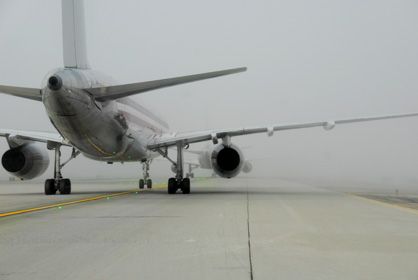
This eLearning course on Low Visibility for CAT II / OTS CAT II incl. EVS Training and LVTO, provides training on low visibility operations (LVOs) with a focus on safety during flight and ground operations in conditions of reduced visibility or darkness.
The course covers topics such as the characteristics and limitations of ILS and visual aids, fog, aircraft/system malfunctions, RVR assessment systems, obstacle clearance requirements, and communication procedures. It also includes information on the preparation, operation, and termination phases of LVPs. This course fulfills the requirements of AMC/GM TO ANNEX V (PART-SPA) and AMC1 SPA.LVO.120 (b) Flight crew training and qualifications.

This online North Atlantic High Level Airspace (NAT HLA) training course is designed for pilots who wish to operate in the North Atlantic High Level airspace. It is set up as a competency-based course, where the student's prior knowledge is taken into account. Each participant will only complete the relevant parts of the training based on their existing expertise. The course ensures pilots understand the regulations and procedures required for obtaining NAT HLA and RVSM approvals and safely navigating the NAT HLA airspace.
Meeting the requirements outlined in NAT Doc 007, NORTH ATLANTIC OPERATIONS and AIRSPACE MANUAL, the course provides essential knowledge and skills for safe operations in the North Atlantic airspace. Pilots will gain a thorough understanding of operational procedures, airspace structure, and safety protocols, completing only the sections most relevant to their experience and qualifications.

This course provides an overview of international aviation law, focusing on key conventions like the Chicago Convention and the Freedoms of the Air. It covers the development of bilateral and multilateral agreements, including the Warsaw and Montreal Conventions on liability, as well as EU regulations such as EC Regulation 261/2004 and the creation of EASA.
Students will explore how states adopt international agreements, the jurisdiction over aircraft, and the coordination of safety, security, and environmental standards at both national and supranational levels, with a focus on their impact on global aviation governance and industry stakeholders.
This course covers the airworthiness standards of Annex 8 of the Chicago Convention, emphasizing the importance of intrinsic safety and the application of Annex 6 standards. It outlines the requirements for aircraft with MTOM over 5,700 kg, including the issuance of Certificates of Airworthiness (C of A) and the role of the State of Registry in maintaining airworthiness records.
The course also discusses the European Union's regulations, such as Regulation 216/2008 and Part M, which establish continuing airworthiness management and certification processes. Additionally, it covers aircraft nationality and registration marks, detailing the format and selection of these marks.
This course covers the fundamental rules governing aircraft operations worldwide. It explains that ICAO Annex 2 rules apply to all aircraft bearing a Contracting State’s nationality, except where local regulations prevail, and that they also govern high‑sea operations. The course details pilot‑in‑command responsibilities, pre‑flight preparation, and the distinction between VFR and IFR flight rules, including minimum altitudes and cruising levels.
Collision‑avoidance procedures, right‑of‑way, and wake‑turbulence considerations are outlined, as are lighting requirements, signal protocols, and the necessity of flight‑plan submission and continuous ATC communication. It also covers emergency handling, interception procedures, and the use of safety pilots during instrument flight.
The course "Aircraft Operations" outlines the Procedures for Air Navigation Services (PAN‑OPS), split into Volume I (Flight Procedures) and Volume II (Construction of Visual & Instrument Flight Procedures). It details departure and arrival design, obstacle‑clearance gradients, SID/STAR construction, approach types (straight‑in, circling, RNAV), aircraft‑category limits, altimeter settings, and ACAS/TCAS use.
The training also covers wind‑effect, speed restrictions, and safety margins for instrument and visual operations. Additionally, it explains transition altitude, flight levels, and parallel runway operations for safety.
This ATS and ATM course gives a comprehensive overview of air‑traffic services and management as defined by ICAO Annex 11 and Doc 4444. It explains the structure of flight‑information regions, control and terminal control areas, and control zones, and the responsibilities of area, approach and airport control units.
The course covers clearance procedures, separation minima (vertical, horizontal, wake‑vortex), radar and SSR usage, and the provision of flight‑information and alerting services. It also details emergency handling, wake‑turbulence categories, and the use of ATIS, VOLMET, and ADS‑B for situational awareness. Additionally, learn about transition levels, flight‑level reporting, and the coordination of visual flight rules during airport.
This course provides an overview on the Aeronautical Information Service (AIS), which collects, edits, and disseminates data for safe air navigation. Governed by ICAO Annex 15, each state must provide or delegate an AIS that ensures information for its territory and responsibilities. Core products form the Integrated Aeronautical Information Package (IAIP): the Aeronautical Information Publication (AIP) with its amendments and supplements, NOTAMs, Aeronautical Information Circulars (AICs), and pre‑flight bulletins.
The AIP is divided into Part 1 (General), Part 2 (En‑Route), and Part 3 (Airport Directory). NOTAMs cover temporary or permanent operational changes; AICs provide advisories. The AIRAC cycle standardises effective dates every 28 days, while WGS 84 underpins geodetic accuracy for navigation systems.
This course covers ICAO Annex 14 requirements for aerodrome design, operation and safety. It details the layout of movement, maneuvering and apron areas, runway and taxiway dimensions, clearways, stopways and safety areas, and the calculation of declared distances (TORA, TODA, ASDA, LDA). The training explains pavement classification, surface conditions, and essential aerodrome information such as braking action and obstacle reporting.
It also covers visual aids—wind and landing direction indicators, lighting systems for low‑visibility operations, and surface markings. Finally, it outlines rescue and firefighting standards, apron management, and ground servicing protocols.
This course provides participants with an understanding of the principles and requirements of Facilitation as defined in ICAO Annex 9. It covers procedures related to the entry and departure of aircraft, organizational aspects, and coordination of facilitation measures. In addition, the course introduces the fundamentals of Search and Rescue (SAR) operations, including organisation, operating procedures, and visual signals.
Participants will complete progress checks on both Facilitation and Search and Rescue topics to assess their knowledge and practical understanding
This course covers the fundamentals of aviation security, outlining the historical threat landscape and the legal framework that governs it. It explains key international conventions (Tokyo, Hague, Montreal, ICAO Annex 17, ECAC Doc 30) and European regulations, and how they translate into national security programmes for airports, carriers and operators.
The module details airport and aircraft security procedures, access control, screening of passengers, cabin and hold baggage, and the handling of prohibited articles, liquids, and potentially disruptive passengers. It also covers in‑flight security measures and the importance of crew training and communication.
This course provides a brief overview of the framework for investigating aircraft accidents and serious incidents. It defines an accident as an event causing fatal or serious injury, significant aircraft damage, or loss of the aircraft, and an incident as any event that could affect safety.
The objective is accident prevention, not blame attribution. Investigations are led by the State of Occurrence, with cooperation from Registry, Operator, Design, and Manufacture states, and notification to ICAO for heavy aircraft. Evidence must be protected and preserved, and all findings are disidentified before reporting. Mandatory reporting systems are required for operators, manufacturers, maintenance personnel, and control staff.
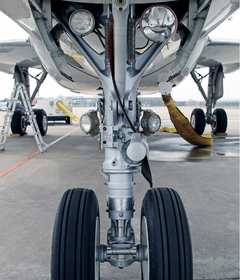
This course, Basic Pilot Training Part FCL 021: System Design, Loads, Stresses, and Maintenance, introduces the fundamentals of aircraft systems and structural integrity.
You will learn about system design and certification levels, understand stress, strain, and loads, explore fatigue and corrosion, and become familiar with key maintenance terms. By the end, you will have a solid foundation in aircraft design and structural considerations, supporting safe and informed flight operations.
This training provides a comprehensive overview of aircraft structural design. It begins with attachment techniques riveting, welding, bolting, pinning, adhesive bonding, and screwing; highlighting their strengths, weaknesses, and inspection methods. The chapter then explores material science, composites (GRP, CRP, aramid), metal alloys, covering strength-to-weight, stiffness, conductivity, fatigue, corrosion, and cost implications.
Subsequent sections include wing and fuselage geometry, monocoque and semi-monocoque construction, load paths, flutter mitigation, door and hatch design, and life-cycle monitoring. Practical pre-flight inspection guidance and structural limitations are also included. It emphasizes the importance of inspections and the testing of composites.
This course, Part FCL 021-13: Oxygen Systems, provides a comprehensive introduction to aircraft oxygen systems for both cockpit crew and passengers. It covers the operating principles, actuation methods, and essential equipment, including smoke hoods (PBE), portable oxygen bottles, and masks.
The course also explains the differences between chemical and gaseous oxygen systems, their advantages and limitations, and the potential dangers associated with oxygen use. By the end of the course, you will have a solid understanding of oxygen system operation and safety, supporting effective and safe flight operations.

Sensors & Instruments is a course that focuses on the study of sensors and instruments. The course covers various types of sensors, their working principles, and applications in different fields. Students will learn about the selection criteria for sensors, signal conditioning, calibration, and data acquisition techniques. The practical hands-on sessions help students to understand the concepts better by implementing them in real-time projects. By the end of this course, students will be able to design and implement sensor-based systems for various applications.
This course covers the measurement of air data parameters, focusing on Bernoulli's Law and its practical applications in aviation. The pitot tube and venturi are discussed as examples of devices using Bernoulli's principle. The course then looks at possible errors in the static pitot system, including positional errors for both the aircraft and the static ports. Methods to reduce these errors are presented, such as the use of multiple pressure transmitting ports.
The course also covers the placement of pitot tubes and the effect of increasing angles of attack on their performance. Instrument errors due to manufacturing and calibration tolerances are mentioned. An additional focus is on large jet transport aircraft which have more complex pitot-static systems with separate sources for each instrument and an alternate static source valve.
This course covers the subject of magnetism, with particular emphasis on the direct reading compass and the flux valve. The Earth's magnetic field is discussed, with an explanation of how it is indicated by flux lines and how a compass needle aligns with these lines. The difference between true north and magnetic north is explained as a variation that changes with latitude due to the horizontal and vertical components of the magnetic field. Magnetic materials are divided into hard iron and soft iron and their magnetic properties are explained. The course also covers how to calculate true and magnetic heading.
This course covers the theory and operation of gyroscopic instruments used in aircraft. A gyroscope is a spinning wheel whose weight is concentrated around the rim and which has two properties: spatial rigidity and precession. These properties are used in attitude gyros, such as the directional gyro and the artificial horizon, and rate gyros, such as the turn and slip indicator and the turn coordinator. The course also discusses the 'degrees of freedom' of a spinning gyro, gyro stabilisation systems and the methods of powering gyros using suction or electricity. It also covers the different types of drift that can occur in gyros, including real drift, apparent drift and transport drift.
This course covers Inertial Navigation Systems (INS) and Inertial Reference Systems (IRS). INS, which can be stand-alone systems, have historically been referred to as 'self-contained navigation systems' using gyro-stabilised platforms for dead reckoning. IRS, on the other hand, are typically integrated into a flight management system (FMS) and provide inertial data to other aircraft systems. Modern INSs often describe inertial platforms, IRSs and Inertial Reference Units (IRUs), typically installed on an aircraft. The course discusses the basic principles of inertial navigation, including double integration of measured accelerations in all three directions, initial position determination, and required corrections such as transport precession, Earth rate precession, Coriolis effects, and gravity.
This course covers trim, yaw dampers and flight envelope protection systems. The course discusses the purpose of a trim system, which is to provide a stable flight condition by removing residual forces in the flight controls caused by the deflections of the control surfaces necessary to achieve that exact flight condition. The course also discusses the layout of a trim system for each control axis used on a typical medium turboprop aircraft and how the trim tabs are controlled from the cockpit to maintain a fixed relationship to the control surface even when it is moved.
This course covers the subject of autothrust systems on jet aircraft. The autothrust system, also known as 'auto-throttle', is an electronic or electromechanical device that automatically controls engine thrust. It can be selected to control thrust based on phase of flight or specific flight parameters such as airspeed and angle of attack. Indications of the current auto-thrust mode and status are shown on the Flight Mode Annunciator (FMA), the autopilot control panel and the engine display. The course covers basic concepts such as the relationship between auto-thrust and autopilot, the principles of the thrust setting function, and the two main types of auto-thrust systems.
This course covers the Communications systems used in civil aviation, specifically focusing on data-link systems that connect traffic control stations for transmitting and receiving digital data. The course discusses three different data communication links currently in use: High Frequency Data Link (HFDL), Very High Frequency Data Link (VDL), and Satellite Communication (SATCOM). These links are used to transmit various types of messages, including Aeronautical Operational Control (AOC) messages, Controller Pilot Data Link Communications (CPDLC) messages, and Automatic Dependent Surveillance (ADS) messages.
The course also covers the properties of HFDL and VDL-2 in regards to signal quality, range/area coverage, line-of-sight limitations, interference due to ionospheric conditions, and data transmission speed.
This course covers the Flight Management System (FMS) and Flight Management and Guidance Systems (FMGS) used in aircraft. The FMS assists the pilot in flight planning, navigation, performance management, guidance and flight progress monitoring. It can be interfaced with the autopilot or flight director to automatically guide the aircraft along the selected path and to tune the navigation radios. The FMGS provides automated en-route and terminal area guidance using defined procedures such as Standard Instrument Departures (SIDs), Standard Terminal Arrival Routes (STARs), holding patterns and procedural turns.
This course covers the definitions, functions and components of alarm and proximity systems as defined in CS-25. Alerting systems are divided into levels based on importance and urgency: Warnings, Cautions and Advisories. Each level requires a different response from the flight crew. Warnings are indicated by a red flashing light and a continuous repetitive chime, while Cautions are indicated by an amber flashing light and a single chime. The course also covers stall warning and stall prevention systems, their types, components and differences. It also explains the function of take-off configuration warning systems and altitude warning systems.
This course covers the Traffic Alert and Collision Avoidance System (TCAS) or Airborne Collision Avoidance System (ACAS), which is designed to reduce the risk of mid-air collisions between aircraft. The training focuses on the features of ACAS/TCAS II Version 7.1, which can issue two types of alerts: Traffic Advisories (TA) and Resolution Advisories (RA). TAs assist pilots in visual acquisition of conflicting aircraft and prepare them for potential RAs, while RAs provide instructions for vertical speed adjustments to avoid collisions. The course also covers the history of TCAS development, system operation, traffic advisories and resolution advisories, and operating procedures.
This course provides training on the Terrain Awareness and Warning System (TAWS) with a focus on understanding its operation, functions, limitations, and inhibits. The content is based on the EGPWS installed in ATR aircraft but may vary depending on specific aircraft or TAWS equipment configurations. The course covers six basic GPWS modes, alert thresholds, surveillance, terrain avoidance, and TAWS limitations. It also includes a chapter on operating procedures and a course end test.
This course covers the topic of Integrated Instruments and Electronic Displays. It starts by discussing the evolution of display units, from CRT screens to LCD screens with touch-screen capability. The chapter then delves into the details of electronic displays, including their limitations in terms of cockpit temperature, glare, and resolution.
The course also covers mechanical integrated instruments such as gyro-driven ADI and HSI. It further explains various display systems like EFIS, engine parameters, crew warnings, aircraft systems, procedure and mission display systems, Electronic Flight Instrument System (EFIS), Head-up Display (HUD), Synthetic Vision System (SVS) and Enhanced Visual System (EVS).
This course covers the maintenance-, monitoring- and recording systems used in aircraft. The Cockpit Voice Recorder (CVR) is a key system that continuously records flight crew communications, cockpit conversations and passenger address audio while the aircraft electrical system is powered. The Flight Data Recorder (FDR) system processes and records critical flight parameters for incident or accident investigation. The Aircraft Condition Monitoring System (ACMS) is a key element of predictive maintenance and consists of a Flight Data Acquisition Unit (FDAU) and associated sensors that provide sensor data from all major aircraft systems and components.
This course focuses on digital circuits and computers and covers the basics of hardware, software, CPU, data bus structure, airborne computers, peripherals and specific systems such as ADC, FMS, GPS, MCDU and GPWS in modern aircraft. It explains how these systems provide essential digital environmental data, flight management, navigation and warning functions for safe flight.
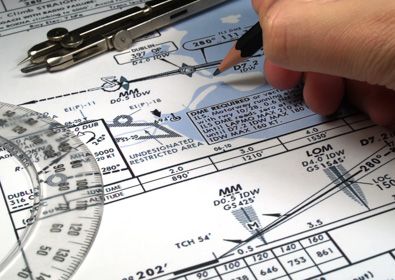
This course is part of the infoWERKs Part FCL Training Solution, designed to provide pilots, student pilots, and aviation fans with essential knowledge on various aviation topics. It follows EASA requirements, ensuring a solid foundation in mass and balance principles crucial for safe and efficient flight operations.
As an online course it provides in-depth knowledge of mass and balance, including its impact on aircraft performance, center of gravity, and operational limits. By the end, students will be able to calculate mass and center of gravity, prepare a load and trim sheet, determine cargo limits, and understand proper cargo securing for safe operations.

This course provides an overview of aircraft performance, beginning with the regulatory framework of CS 23 and CS 25 and the European operational regulations that define performance classes for commercial aircraft. It explains key performance speeds and distances—stall, take‑off, landing, and climb—and the forces acting on an aircraft in each flight phase.
The lesson covers the calculation of climb gradient, absolute and service ceilings, and the impact of density altitude, weight, flap setting, and runway conditions on take‑off and landing performance. Practical examples illustrate runway slope, clearway, and stopway concepts, while engine power settings for take‑off, climb, and cruise are reviewed.
This course covers the regulations and performance considerations for Performance Class B aircraft, focusing on both single‑engine and multi‑engine propeller‑driven airplanes with a maximum of nine passengers and a take‑off mass not exceeding 5 700 kg.
Students learn the key speed definitions—stall speeds (VS₀, VS₁), rotation speed (VR), take‑off safety speed (V₂min), and reference landing speed (VREF)—and how runway slope, wind, altitude, and aircraft mass affect take‑off and landing distances. The material explains flap settings, climb gradients, and the minimum control speed (VMCA) for engine‑failure scenarios, as well as the specific EU‑OPS and JAR‑OPS requirements for field‑length, climb, and missed‑approach performance.
This training covers the performance of Class A aircraft under CS‑25, focusing on take‑off, climb, and landing fundamentals. Learners grasp the forces on an aircraft, speed and distance definitions, and how factors such as weight, flap setting, runway slope, and surface condition influence take‑off distances and masses.
The module details V‑speeds (V1, VR, V2, VMCG, VMC, VME, VMBE, VMU, VLOF), the calculation of runway‑limited, climb‑limited, brake‑energy‑limited, tire‑speed‑limited, and obstacle‑limited take‑off masses, and the impact of engine failure and windshear. It also covers cruise techniques, drag components, and landing performance, emphasizing safety margins and regulatory limits.

This course focuses on the essential knowledge required for a Notice to Airmen (NOTAM) briefing. It introduces pilots and aviation personnel to the critical role of NOTAMs in flight safety and operational planning. The primary objective is to ensure users can effectively interpret vital pre-flight information.
The curriculum begins with a chapter introduction outlining the importance of situational awareness through NOTAM data. It then transitions into a detailed examination of the standard format of a NOTAM, teaching learners how to decode specific codes, abbreviations, and structure elements to accurately identify hazards, restrictions, and changes affecting air navigation.
This course, Part FCL 033-04: Point of Equal Time (PET) and Point of Safe Return (PSR), introduces essential contingency planning for flight operations. It explains how to calculate and determine the Point of Equal Time and the Point of Safe Return to support decision-making in the event of an emergency.
By understanding these points, you will be able to quickly assess whether remaining fuel is sufficient to return to the departure airfield and identify the nearest suitable airfield in terms of flight time, enhancing safety and preparedness during flight.
This training covers the ICAO ATC flight‑plan framework, detailing the required information, filing procedures, and compliance rules. It explains the two flight‑plan types (Individual CA 48 and Repetitive Flight Plan) and three categories (full, repetitive, abbreviated).
The chapter walks through completing a CA 48 form using a Vienna‑to‑London example, covering aircraft identification, flight rules, equipment, routing, speed, and alternate airports. It also discusses when a plan must be filed, slot‑time checks, in‑flight amendments, and automatic closure at the destination. The material is essential for pilots and dispatchers preparing compliant flight plans.
This course covers systematic flight monitoring and in-flight replanning to ensure safety and efficiency. It details seven key monitoring areas: navigation, performance, fuel, weather, airspace, systems, and safety margins. The training explains how to detect track and time deviations caused by winds or ATC, using formulas for ground speed and ETA updates.
It also emphasizes strict fuel management, including reserve calculations, declaring MINIMUM FUEL or MAYDAY states, and replanning procedures to maintain regulatory compliance and safe landing capabilities under changing conditions.

This Part FCL - Basic Aviation Psychology course is based on EASA requirements.
This course provides you the required basic knowledge on Aviation Psychology. You will learn how you are affected by perception and memory, how does human error arise and how you can avoid and manage errors. You will also find a guideline on decision making and how human overload or underload may impair flight safety.
This course focuses on the significance of human factors in aviation. It explains how threats, errors, and undesired aircraft states are everyday events that flight crews must manage to maintain safety. The course introduces the TEM (Threat and Error Management) model, which is a proactive philosophy for maximizing safety margins.
It emphasizes that effective efforts to achieve safety must recognize the importance of culture and everyone must have a full understanding of cultural influences on their operations.
This course is part of the infoWERKs Part FCL Training Solution, designed for pilots, student pilots, and aviation enthusiasts, aligning with EASA requirements. TEM is a crucial risk management model in aviation, helping flight crews identify and manage threats, errors, and undesired aircraft states (UASs).
The course covers three threat categories (Anticipated, Unanticipated, and Latent) and three error types (Aircraft Handling, Procedural, and Communication). Learn how countermeasures such as planning, execution, and review can effectively mitigate risks and enhance flight safety.
This course focuses on the basics of flight physiology, specifically covering the respiratory system and its components. The chapter describes the main components of the respiratory system and their functions, including the process of oxygen transport in the body and to the tissues, carbon dioxide transport in the body and its effect on oxygen transfer, as well as the impact of carbon monoxide and smoking on oxygen exchange.
Additionally, it explains how the receptor cells monitor O2 and CO2 levels and make changes to maintain a balanced state.
This course focuses on the importance of personal hygiene in maintaining good human performance. Personal hygiene practices such as regular cleaning, hand washing, and prompt treatment of minor injuries are discussed.
Additionally, the course touches on the impact of fatigue, circadian rhythm disruption (CRD), and common minor ailments like colds and flu on flying ability. It also highlights the importance of obesity awareness and its effects on health.
This course focuses on the human sensory system and its role in flight. The course covers the five senses (touch, smell, taste, sight, and hearing) and their function in gathering information from the external environment.
It also discusses the concept of multi-sensory perception and how the brain integrates information from different senses to create a complete understanding of the environment. Additionally, the course touches on the importance of balance and its relationship to flight safety.

The course "The Atmosphere" teaches you about the structure and characteristics of Earth's atmosphere. It explains that the atmosphere is made up of different gases, and these gases have different amounts in them and different temperatures in different layers, which we call 'spheres'.
The troposphere, which is the layer closest to Earth, contains most of the water vapour and weather events. The stratosphere, which is found above the tropopause, has rising temperatures and 90% of ozone. The mesosphere and thermosphere follow, with temperatures getting lower and gases becoming ionised. The course also covers temperature scales, solar radiation, heat transfer, how quickly heat rises and falls, and measuring pressure.
This course explores the topic of wind, which refers to the movement of air caused by pressure differences in the atmosphere. Wind is characterized by two vectors: speed and direction. Wind speed is typically measured in nautical miles per hour (knots), although it may also be expressed in kilometers per hour.
Wind direction is given relative to north: weather charts use true north, while air traffic controllers refer to magnetic north. In addition, the course describes how wind is measured both at ground level and at higher altitudes.
This course covers the topic of thermodynamics, with a focus on water in the atmosphere. Water exists in three states: vapor, liquid, and solid. Humidity refers to the amount of water vapor in the air and is influenced by changes in temperature and pressure.
During phase changes, latent heat is either released or absorbed, playing a vital role in atmospheric processes. The course also examines adiabatic heating and cooling, as well as the concept of atmospheric stability.
This course covers the formation and classification of clouds, fog, and precipitation. It explains how clouds form through the lifting and cooling of air to its saturation point, leading to condensation or sublimation. Key precipitation processes, including the Bergeron-Findeisen and collision-coalescence mechanisms, are discussed.
The course also outlines various precipitation types, such as rain, snow, sleet, hail, and drizzle, and how they vary with air mass and cloud type.
This course focuses on air masses and fronts—key atmospheric phenomena that significantly impact aviation. An air mass is a large body of air in which temperature and humidity remain relatively uniform at a given altitude.
As air masses move across the Earth's surface, they can transport distinct thermal and moisture characteristics over long distances. When one air mass replaces another, it often results in noticeable and sometimes dramatic changes in weather. The boundaries between air masses are known as fronts. The course provides detailed explanations of air masses, with a particular focus on cold and warm fronts.
This course covers the topic of pressure systems. It explains the formation and characteristics of various pressure systems, including global high and low-pressure areas, warm (dynamic) and cold (thermal) anticyclones, ridges or wedges, non-frontal depressions, and tropical revolving storms or tropical cyclones.
The course also examines the weather patterns associated with these systems, their seasonal formation, and their impact on weather conditions.
This course focuses on climatology, covering the climate characteristics of various global climatic zones and key aspects of tropical climatology. It also examines typical weather patterns in the mid-latitudes.
The course explores the influence of latitude on climate, as well as secondary factors such as proximity to land and water masses, altitude, topography, prevailing winds, ocean currents, and the frequency of cyclonic storms.
The Flight Hazards course focuses on various weather-related risks affecting aircraft operations, including aircraft icing, turbulence, and temperature inversions. Icing can significantly degrade aircraft performance and increase fuel consumption, posing a serious threat to flight safety.
The course examines the meteorological conditions that lead to ice accretion both on the ground and in flight, the different types of icing, associated hazards, and recommended methods of avoidance and mitigation. In addition, the course provides detailed information on other flight hazards such as turbulence, wind shear, thunderstorms, tornadoes, temperature inversions, and visibility-reducing phenomena.
This course covers the use of meteorological information in aviation, including surface wind, visibility, runway visual range (RVR), cloud reporting, and pressure systems. Students learn to interpret METAR and TAF reports, understand cloud classifications, and review how RVR is measured using transmissometers.
The course also introduces the use of satellite and radar imagery, upper-air observations, and significant weather charts, as well as pilot reports (PIREPs) and automatic systems such as ASDAR. Finally, it explains the purpose and issuance of SIGMETs and AIRMETs, emphasizing the importance of pre-flight weather documentation in safe and effective flight planning.
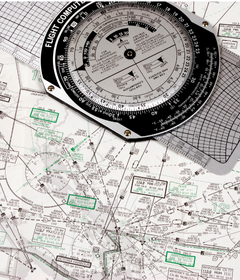
This course introduces the fundamentals of aviation navigation, beginning with the Earth’s geometry and its relationship to the Sun. Students learn how latitude and longitude define positions, how great-circle and small-circle concepts apply to navigation, and how different chart projections (Mercator, Lambert, Polar) represent these on maps.
The module explains the use of magnetic compasses, magnetic variation and deviation, and the influence of the Earth’s magnetic field on navigation. It also covers timekeeping, UTC, the International Date Line, and how latitude affects sunrise, sunset, and twilight. Practical skills include reading and interpreting charts, calculating convergence, and applying in-flight navigation techniques.
This course covers in‑flight navigation and dead‑reckoning fundamentals. It introduces the One‑to‑Sixty Rule for quick calculations of wind corrections, distance off‑track, track error, and glide‑slope height. The course explains how to compute track error, closing angle, and total correction to return to a planned track.
It also covers glide‑slope geometry, rate of descent, runway slope, and VOR/DME off‑track calculations. The dead‑reckoning section details the wind triangle, heading, track, drift, wind correction angle, and the impact of variation and deviation. Altitude concepts such as ISA, density altitude, and pressure settings are also reviewed.
This course covers the fundamentals of aeronautical charting, focusing on how charts represent the Earth’s surface for navigation. It explains the importance of conformal projections, detailing the Mercator, Lambert conformal conic, and polar stereographic maps, and how scale varies across them.
Students learn to interpret meridians, parallels, great circles, and rhumb lines, and how to plot positions using VOR/DME, coordinates, and dead‑reckoning. The module also covers chart symbols, elevation representations (contours, spot elevations, shading, hachures), and key flight‑planning concepts such as heading, track, drift, wind, TAS, and groundspeed.
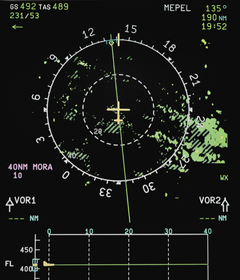
This training covers the fundamentals of radio propagation, explaining how direct and alternating currents generate magnetic fields that produce electromagnetic waves. It defines key concepts such as period, frequency, wavelength, amplitude, and phase, and outlines the electromagnetic spectrum’s frequency bands and their typical aviation uses.
The course details modulation techniques (keyed, amplitude, frequency, phase, pulse), emission designators, and antenna types (dipole, loop, parabolic, slotted, helical) with their polarization characteristics. It also describes the ionosphere’s layers, sky, ground, and space wave propagation, the Doppler effect, and factors affecting signal quality such as reflection, refraction, diffraction, absorption, and interference.
This course covers the fundamentals of radio navigation aids used in aviation, including non‑directional beacons (NDBs) and their Automatic Direction Finders (ADF), VHF Omnidirectional Ranges (VOR), Distance Measuring Equipment (DME), Instrument Landing Systems (ILS), and the emerging Microwave Landing System (MLS).
It explains each system’s operating frequencies, signal modulation, antenna configurations, and typical ranges, as well as the associated cockpit displays and control panels. Practical aspects such as identification procedures, error sources (e.g., mountain and coastal refraction), and performance monitoring are discussed to prepare pilots for reliable navigation and approach operations and ensure safe flight operations under various weather conditions.
RADAR, short for Radio Detection And Ranging, uses rotating antennas to emit radio pulses that echo off objects. The time delay between emission and return determines range, with 6.17 µs per nautical mile. Primary radar displays both permanent echoes (mountains, buildings) and moving targets; a moving‑target indicator removes stationary clutter but can miss aircraft at a “blind speed.”
Coverage depends on transmitter power and atmospheric conditions, and radar operates across six frequency bands (P, L, S, C, X, K). Weather radar systems combine a transmitter/receiver, phased‑array antenna, a cathode‑ray indicator, offering ground‑mapping. Transponders (Mode A/C/S) and TCAS provide identification, altitude, and collision‑avoidance data.
This course focuses on Global Navigation Satellite Systems (GNSS), including GPS, GLONASS, GALILEO, and BEIDOU. These systems provide three-dimensional position fixes, ground speed data, and precise time references for receivers. Critical attributes of GNSS include accuracy, integrity, availability, and continuity.
The course covers two modes of operation: Standard Positioning Service (SPS) and Precise Positioning Service (PPS). It also discusses the three segments of GNSS: space, control, and user. Signal broadcasts, ionospheric propagation delay, dilution of position, satellite clock error, satellite orbital variations, and multipath are examined as factors affecting accuracy.
This course introduces the concept of Performance Based Navigation (PBN). The course covers the three components of PBN: navigation application, specification, and infrastructure. It explains how these components are related and how they are implemented in different airspace concepts.
The course also discusses the importance of continuity, system integrity, and RAIM in GPS-based navigation. Additionally, it covers raw data and computed data, designation of RNP and RNAV specifications, and management of the navigation database.
This Part FCL - All Weather Operations / Low Visibility Operation course provides you with in depth knowledge on flight operations during low visibility conditions. It includes basic knowledge on the applicable rules and regulations, the key players involved as well as operating rules and procedures for the various operating categories.
Requirements for ATC and aerodromes will also be discussed. At the end of the course you will also know and understand the visual aspects and what equipment you require and how to use it to ensure a safe flight.
This course outlines the rules that operators must follow to keep flight crews free from fatigue and maintain safety. It defines key terms such as duty period, flight duty period (FDP), flight time, home base, rest period, and standby. Operators must publish duty rosters early, limit duty hours to 60 in 7 days, 110 in 14 days, and 190 in 28 days, and cap flight time at 100 hours in 28 days, 900 in a calendar year, and 1,000 in 12 months.
Minimum rest before an FDP is 12 hours at home base or 10 hours away, with an 8‑hour sleep requirement. In‑flight rest and unforeseen circumstances allow limited extensions, but commanders must consult crews and avoid excessive fatigue. The course also covers standby duties, accommodation, and rest after standby.
This course covers flight preparation requirements including in‑flight assessment of landing distance, focusing on runway contamination and its impact on take‑off and landing performance. Learners study definitions of wet, slippery, and contaminated runways, the Runway Condition Report (RCR) and Runway Condition Code (RWYCC) system, and the updated SNOWTAM format.
The course explains V1/V2 decision speeds, take‑off and landing distance calculations, and the role of AIREPs in reporting braking action. Practical guidance on flight planning, in‑flight assessment, and safety margins for wet or contaminated conditions is provided.
Long‑range Flights and ETOPS covers the evolution of twin‑engine operations from early 20th‑century milestones to modern commercial aviation. It explains the regulatory framework, including FAA and ICAO diversion‑time limits, and defines key ETOPS concepts such as threshold distance, adequate aerodrome, ETOPS segment, and one‑engine‑inoperative cruise speed.
The course details type‑design approval, in‑service reliability metrics, operational approval prerequisites, and alternate selection criteria (take‑off, destination, en‑route). It also outlines fuel planning, critical‑fuel calculations, and contingency procedures for engine or system failures during extended‑range flights. Students learn how to compute critical points, apply fuel reserves, and maintain across routes.
This training covers the North Atlantic High‑Level Airspace (NAT HLA), the busiest oceanic corridor linking Europe and North America. It details the approval process for aircraft and crews, the mandatory RVSM and Data‑Link Mandate (CPDLC/ADS‑C), and the navigation performance requirements (horizontal, vertical, and system redundancy).
The course explains flight‑planning procedures, organized track systems, SLOP usage, and contingency actions for equipment failures or loss of communication. It also outlines PBCS compliance, jet‑stream considerations, and the regulatory framework that ensures safety and efficient use of the NAT airspace.
This course equips aviation personnel with the knowledge and tools to comply with ICAO requirements for runway surface condition assessment and reporting. Students learn the background of ICAO Ground‑Runway‑Factor (GRF), the Runway Condition Assessment Matrix (RCAM), and how to assign runway condition codes (RWYCC 0‑6). They practice preparing Runway Condition Reports (RCRs) and SNOWTAMs, including contaminant coverage, depth, and situational‑awareness data.
The curriculum covers flight‑crew reporting of braking action, NOTAM issuance for slippery wet runways, and integration of performance data for take‑off and landing. By course end, learners can objectively assess runway conditions, generate accurate RCRs, communicate findings to pilot’s control.
Security (unlawful events) is a comprehensive training module that covers the full spectrum of aviation security. It begins with an overview of the threat landscape, legal frameworks (Tokyo, Hague, Montreal conventions, ICAO Annex 17, ECAC Doc 30) and national security programmes. Subsequent chapters detail airport and aircraft security procedures, passenger and cabin‑baggage screening, hold‑baggage handling, prohibited‑article lists, cargo and mail controls, and in‑flight supplies.
The course also addresses in‑flight security measures, disruptive‑passenger protocols, threat‑level classification, and final assessment. It equips staff with the knowledge and skills to prevent, detect and respond to unlawful interference and to maintain compliance with international standards.
This course covers special operational procedures and hazards, focusing on ground de‑icing/anti‑icing, adverse weather, wake turbulence, crew incapacitation, equipment and configuration deviations, security, accident handling, and altitude/ground proximity alerting.
It details Minimum Equipment List (MEL) and Master MEL (MMEL) concepts, de‑icing fluid types, holdover times, and procedures for contaminated runways. The course also addresses bird‑strike risk, wake turbulence separation, and dangerous goods handling, emphasizing safety, regulatory compliance, and operational decision‑making for pilots and ground crews.
This training covers the transport of dangerous goods by air, based on IATA, ICAO, and EU regulations. It explains when goods are dangerous, the legal framework, and the roles of shippers, handlers, and crew. Participants learn classification, packing groups, labeling, and marking requirements, and how to identify undeclared or mis‑declared items.
The course also addresses reporting procedures for accidents, incidents, and damaged packages, with special emphasis on lithium‑battery safety. The curriculum ends with a competency‑based assessment to ensure safe handling throughout the transport chain.
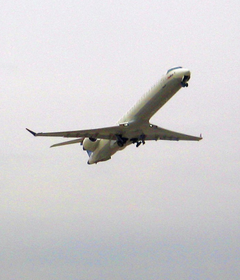
This course introduces the fundamentals of subsonic aerodynamics, starting with the structure of the atmosphere and the International Standard Atmosphere (ISA) used in performance calculations. It explains core airflow concepts such as compressibility, continuity, dynamic pressure, and Bernoulli’s principle, and highlights the differences between laminar and turbulent flow as well as the role of the boundary layer.
Students learn how lift is generated, how drag is produced, and how factors such as wing planform, aspect ratio, and high-lift devices (flaps, slats, vortex generators) affect performance. The course also examines stall behavior, vortex formation, and the effects of icing and frost on aerodynamic efficiency. Practical topics include the design of inlets for subsonic and supersonic engines and their impact on aircraft performance, safety, and operational efficiency.
This course introduces the physics of sound propagation, the temperature dependence of the speed of sound, and the critical Mach number—the point at which airflow over parts of the aircraft first reaches sonic speeds. The course explains shock waves, expansion waves, wave drag, and the formation of Mach cones and sonic booms.
It also explores design strategies to increase the critical Mach number, including supercritical airfoils, swept wings, and the area rule, showing how wing geometry and smooth cross-sectional design reduce wave drag and enhance transonic performance.
This course explores the physics of airflow over a wing, tracing the development of the thin laminar boundary layer as it grows into turbulence, transitions, and ultimately separates to produce a stall. It explains how the lift coefficient increases with angle of attack until reaching a critical point, at which the boundary layer detaches—causing lift to decrease and drag to rise.
The course examines stall warning systems, recovery techniques, and the influence of factors such as wing design, sweep, icing, and load factor. It also addresses the aerodynamic and operational consequences of stalls, emphasizing the value of early detection and effective pilot response.
This course focuses on knowledge necessary to reduce loss-of-control events in large, swept-wing aircraft. The course introduces the fundamentals of upset recognition, key aerodynamic principles, angle-of-attack, g-load awareness, energy management, and flight-path control. Students analyze real accident case studies and explore the environmental, mechanical, and human factors that contribute to upsets.
The training also emphasizes effective monitoring, managing startle and surprise, and applying the Mental Upset Concept. Practical modules cover recovery techniques for stalls, nose-high, and nose-low situations, with a final assessment to confirm competence.
This course introduces the fundamentals of aircraft stability, control, trim, and operating limits. It explains both static and dynamic stability, covering longitudinal, lateral, and directional stability, and highlights the roles of the tailplane, fin, and wing sweep in maintaining equilibrium. The course details the primary control functions of pitch, roll, and yaw through elevators, stabilators, canards, ailerons, rudders, elevons, and ruddervators, along with the use of tabs, servo mechanisms, and balance panels to assist pilot input.
Trim systems and load-factor limits are examined, as well as stall speed, turbulence effects, maneuvering speed, and how banked turns influence load and stall behavior. Finally, key flight-mechanics concepts such as steady-state flight, turning flight, and adverse yaw are introduced to give pilots a practical understanding of how aircraft respond in different conditions.
This course explains how a propeller converts engine torque into thrust, examining tractor, pusher, and push-pull configurations. It introduces the key aerodynamic principles—lift, drag, blade twist, pitch, and efficiency—and shows how blade angle, advance ratio, and tip speed influence performance.
The course also addresses engine failure scenarios, including feathering, and their effects on thrust, drag, and aircraft control. Secondary factors such as torque, gyroscopic precession, P-factor, and the concept of the critical engine are explained in practical terms. Finally, the course provides guidance on go-around procedures and single-engine operations to support safe and effective flight.

This course highlights the vital role of radiotelephony in aviation safety, with a strong focus on using standard phraseology to prevent misunderstandings. The course covers message priority, emergency prefixes, and the need for clear and concise communication.
Students learn the phonetic alphabet, the use of UTC, and proper radio transmission techniques. The structure of ATC messages, correct read-back procedures, and the application of standard words and phrases are explained in detail. The course also introduces the basics of radio waves, frequency ranges, and how terrain and obstacles can affect signal propagation.

This Part FCL - KSA 100 course is included in the infoWERKs Part FCL Training Solution, providing knowledge on various topics to pilots, student pilots or aviation enthusiasts. Developed in accordance with EASA requirements, this course focuses on key areas such as communication, leadership and teamwork, problem-solving, and decision-making. It also addresses critical competencies like situation awareness, workload management, and threat and error management (TEM).
KSA stands for “Knowledge (K), skills (S) and attitude (A)”. In aviation training the subject ‚Area 100 - KSA‘ is a new concept in theoretical knowledge training. By implementing these KSA 100 training topics the pilot training shall move away from factual knowledge training towards a more competency-based approach. The course helps to develop the students' skills and mindset needed to perform effectively in complex aviation environments.

Performance Based Communication (PBC) and Performance Based Surveillance (PBS) refers to communication and surveillance based on performance specifications applied to the provision of air traffic services. Through this comprehensive online training, pilots will study key topics such as operational authorization, flight planning, eligibility requirements, and procedures for PBCS implementation in the North Atlantic High-Level Airspace (NAT/HLA).
This PBCS course fulfills the requirements of ICAO Annex 6 Operation of Aircraft, ICAO Annex 11 Air Traffic Services, ICAO Doc 9869 PBCS Manual, ICAO Doc 10037 Global Operational Data Link (GOLD) Manual, ICAO Doc 4444 PANS ATM Manual, ICAO Doc 7030 Regional Supplementary Procedures Manual and NAT Doc 007 North Atlantic Operations and Airspace Manual.
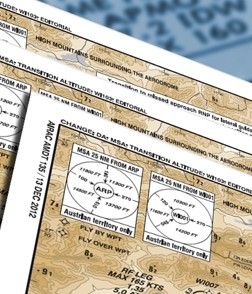
Performance Based Navigation (PBN) is a new concept based on the use of Area Navigation (RNAV) systems. This Performance Based Navigation - Basic Requirements training provides pilots general information on the Performance Based Navigation concept including terminology and the basic idea behind.
Furthermore it gives details on the appropriate RNAV and RNP specifications. The course fulfills the requirements of AMC1 CAT.OP.MPA.126 Performance-based navigation (b), and Doc. 9613 Performance Based Navigation (PBN) Manual 4th Edition -2013.
This online course on Performance Based Navigation - RNP AR (Authorization Required) Approach is a special training for RNP AR (Authorisation Required) Approach. It covers the benefits, design concepts, and requirements for flying a RNP AR approach.
The training is divided into five parts: Concept of RNP AR, RNP AR Approach Chart / Design Concepts, Aircraft Requirements, Operating Procedures - Approach preparation, and Operating Procedures - Flying the approach. The course provides an understanding of the increased risks and complexities associated with these procedures, mitigated through more stringent RNP criteria, advanced aircraft capabilities and increased aircrew training.
The Safety and Emergency Equipment Training is an online course designed to familiarize flight crew members with onboard emergency equipment and ensure passenger safety. It prepares the crew to respond quickly and precisely in emergencies by following standardized procedures, meeting the requirements of ORO.FC.130 (a), ORO.CC.125, and ORO.FC.230.
The course covers aircraft safety equipment, focusing on emergency exits, fire protection, and detection systems. It explains the regulations regarding the number, type, and design of emergency exits for quick evacuation and provides details on fire detection systems, including thermoswitch and rate-of-temperature-rise systems.

Controlled flight into terrain remains one of the leading causes of aviation accidents. To help prevent such incidents, Terrain Awareness and Warning Systems (TAWS) have been developed. This online TAWS course is designed to provide essential academic knowledge and meets the requirements of GM1 CAT.OP.MPA.290 for Ground Proximity Detection and TAWS Flight Crew Training.
Focusing on system operation, functions, limitations, and inhibits, the course is based on the EGPWS installed in ATR aircraft, though content may vary depending on specific aircraft or TAWS configurations. It covers the six basic GPWS modes and includes a chapter on operating procedures.

This Volcanic Ash Avoidance Training is required for both initial and recurrent training under Part OPS and is designed to familiarize pilots with the risks of volcanic ash contamination in flight operations. The course meets the requirements of AMC/GM to Annex III (PART-ORO) GM2 ORO.GEN.200(a)(3).
In the course of the online training pilots get to know crucial information on volcanic activities and their potential hazards, focusing on ash clouds' effects on aircraft, how to identify ash encounters, and assessing risks. Additionally, students learn about the broader impact of volcanic eruptions, helping flight crews understand the nature of volcanic hazards and make informed decisions to ensure safety during operations.

The Winter Operations Initial Flight Crew Training was designed specifically to meet the needs of flight crew dealing with de-/anti-icing procedures in their ever-day work. The course is based on the SAE Training and Qualification Program for Deicing/Anti-icing of Aircraft on the Ground issued 2021/06 (AS6286) and EASA SIB No.: 2018-12.
The online course provides pilots and ground crews with essential knowledge on winter operations, including regulatory compliance, aircraft de-icing and anti-icing procedures, meteorological considerations, and the effects of frozen contamination on aircraft performance.

This eLearning course provides an overview on the topic of flight and duty time limitations and rest requirements for commercial airtransport operators according ORO.FTL.200 to 235. The operator is responsible for ensuring that flight duty periods are planned to prevent crew member fatigue, allowing them to perform their duties safely.
Key definitions include duty period, flight duty period (FDP), and flight time. Maximum duty periods and flight times are regulated, with post-flight duties counting as duty period. The course also discusses rest periods, home base, sectors, standby, and augmented crew requirements. Commanders have discretion to extend flight duty periods in case of unforeseen circumstances, considering flight crew augmentation and rest facilities.
This Introduction to Safety Management System course will help students and organizations understand the function, role and importance of developing and implementing a Safety Management System (SMS). Participants learn how an effective system can build a positive safety culture within an organization.
Focusing on how an effective SMS can enhance safety within an organization, this online course covers key safety principles, regulations, and hazard management. Designed to meet the requirements of AMC1 ORO.GEN.200(a)(4), the training helps students recognize the value of SMS in preventing accidents and improving overall safety performance.
This online training provides an insight into the Minimum Equipment List (MEL), which is a document that lists the equipment that may be temporarily inoperative under certain conditions at the commencement of flight. The MEL is prepared by the operator for their own particular aircraft based on the Master Minimum Equipment List (MMEL), taking into account specific variables such as operating environment, route structure, and geographic location.
The student learns how to identify the minimum equipment and conditions needed to safely operate an aircraft having inoperative equipment, with the goal of minimizing continued operation with inoperative equipment. The course also covers the Configuration Deviation List (CDL), which has the character of a supplement to operational limitations and indicates operation of the aircraft without certain secondary airframe and engine parts is possible.
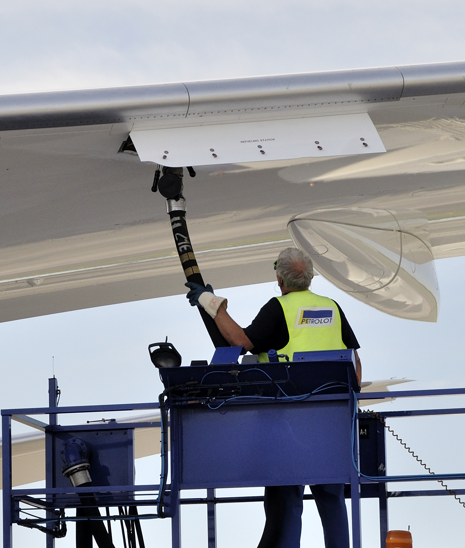
This online course provides essential training in Fuel and Energy Management for Pilots and Flight Operations Officers (FOOs). It is designed to support Flight Operations Basic Training and Air Operations Training programs, offering a solid foundation in fuel planning principles, regulatory requirements, and operational best practices. Students will learn how to calculate usable fuel/energy, apply both basic and individualized fuel schemes, and make informed decisions about airport selection, contingency planning, and fuel reserves.
The course also covers in-flight fuel monitoring, re-planning procedures, and the integration of meteorological factors into fuel management strategies. Through scenario-based learning and examples, participants will gain the knowledge and skills needed to support safe and effective aircraft fuel management.

FREE COURSE!
Are you ready for summer? Prepare yourself with this FREE online course for HOT WEATHER Operation! Just book it now!
Flight operations in hot weather and at high altitudes need special consideration as they have a significant influence on your day to day operation. Take-off and landing performance heavily depend on temperature and altitude. Cruise performance at or near the optimum altitude is also influenced by temperature.
This Aviation Security online course focuses on aviation security, covering airports, passengers, cargo, and in-flight security, in line with ICAO and European regulations. The training meets the requirements of REGULATION (EC) No 300/2008, COMMISSION REGULATION (EU) No 2022/1174, and COMMISSION REGULATION (EC) No 272/2009, as well as Decision 2010/774/EU.
Key topics include legal requirements, airport and aircraft security, baggage handling, prohibited items, cargo and mail, in-flight security measures, and procedures for managing disruptive passengers. The course ensures that aviation personnel understand their responsibilities and the necessary measures to prevent unlawful interference with civil aviation. A final test is included to assess participants' understanding.
The Fatigue Management Training for pilots addresses how fatigue, sleep loss, and circadian disturbances can affect performance and safety, particularly in both long and short haul operations.
The course fulfills the requirements of AMC1 ORO.FTL.250 and provides essential training on recognizing the causes and effects of fatigue, implementing effective countermeasures, and understanding crew responsibilities. It covers lifestyle influences, sleep disorders, and strategies for optimal rest, ensuring pilots can manage fatigue effectively to maintain safety in flight operations.
The Fire Fighting and Smoke Removal course is designed for Flight and Cabin Crew and provides the theoretical knowledge required by EASA regulation PART-ORO. This course also aims to train on the causes and preventive measures for smoke and smell development in the cockpit, ensuring crews are equipped to handle such emergencies effectively.
The course covers general aspects of smoke and fire onboard, including fire classification, development, and extinguishing methods. It explores fire extinguishing agents, the operation of fire extinguishers, wire degradation, and the use of circuit breakers. Additionally, the course emphasizes communication protocols and general procedures for managing fire-related emergencies and smoke removal in the aircraft.
The cold season is approaching. Make sure you are prepared for Winter Operation, i.e. operating in snow, frost and icing conditions. This FREE "Get Ready for the Winter Season" course provides you with a short overview on the most important topics you need to know.
To get all details and to learn more, enroll yourself to one of our regular Winter Operations trainings in our shop.
This Runway Surface Condition Assessment and Reporting course has been developed to assist aviation personnel to meet the ICAO requirements for runway surface condition assessment and reporting.. A fundamental change in the new reporting system is the introduction of runway condition code (RWYCC).
The Runway Surface Condition Assessment and Reporting online course is specifically designed to equip pilots, airport personnel, and dispatchers with comprehensive knowledge and practical skills related to assessing and reporting runway conditions. This interactive and engaging course provides a solid foundation for understanding runway surface conditions, enabling participants to make informed decisions and ensure safe operations. The course meets the ICAO requirements for runway surface condition assessment and reporting.
This multimedia-based Airside Safety eLearning course provides essential knowledge on hazards, risks, and safety requirements in the airside environment. It is designed for those managing, monitoring compliance, or working airside, ensuring a solid understanding of safety protocols.
The online course is based on European regulations and ICAO recommendations, supplemented by industry ‘best practice’ to enhance operational safety. Participants will learn about the components of an airport, security restrictions, hazards, personal safety measures or emergency procedures, equipping them with the skills to work safely and efficiently in this high-risk environment.
This Cosmic Ionizing Radiation course will familiarize you with the basics of cosmic ionizing radiation, its exposure levels, health effects, and mitigation strategies. The online course covers fundamental concepts, including the classification of radiation, the impact of altitude and latitude on exposure, solar activity, and rare but significant solar proton events.
It also examines health risks, regulatory guidelines, and protection measures for aviation professionals. Additionally, it explores the influence of radiation on aviation instruments and infrastructure. This course fulfills the requirements of FAA AC No: 120-61B and EASA SIB No.: 2012-09R1.
This course focuses on the effects and risks associated with alcohol and drug use. Enhance your understanding of alcohol and drug use with this comprehensive course. Learn about the effects of alcohol, including intoxication, metabolism, and long-term health risks.
Understand the dangers of self-medication, side effects of over-the-counter drugs, and the impact on mental and physical health. This course covers alcoholism as a disease, treatment options, and responsible consumption. Ideal for pilots, healthcare professionals, and safety officers, it highlights the impact of alcohol and drugs on performance and decision-making.
The Dangerous Goods Competency Based Training provides a comprehensive introduction to the handling and transportation of dangerous goods in compliance with IATA, ICAO, and EU regulations. Participants will learn about hazard classification, packaging, labeling, and documentation requirements, as well as legal frameworks and safety measures.
The training covers risk assessment, regulatory responsibilities, and incident reporting while emphasizing competency-based learning. Special focus is given to hidden dangers, undeclared goods, and lithium battery safety. Ideal for airline staff, cargo handlers, and aviation professionals, this course ensures safe and compliant operations in air transport.
This eLearning course provides an overview on the topic of flight and duty time limitations and rest requirements for commercial airtransport operators according ORO.FTL.200 to 235. The operator is responsible for ensuring that flight duty periods are planned to prevent crew member fatigue, allowing them to perform their duties safely.
Key definitions include duty period, flight duty period (FDP), and flight time. Maximum duty periods and flight times are regulated, with post-flight duties counting as duty period. The course also discusses rest periods, home base, sectors, standby, and augmented crew requirements. Commanders have discretion to extend flight duty periods in case of unforeseen circumstances, considering flight crew augmentation and rest facilities.
This Introduction to Safety Management System course will help students and organizations understand the function, role and importance of developing and implementing a Safety Management System (SMS). Participants learn how an effective system can build a positive safety culture within an organization.
Focusing on how an effective SMS can enhance safety within an organization, this online course covers key safety principles, regulations, and hazard management. Designed to meet the requirements of AMC1 ORO.GEN.200(a)(4), the training helps students recognize the value of SMS in preventing accidents and improving overall safety performance.
The Fatigue Management Training for pilots addresses how fatigue, sleep loss, and circadian disturbances can affect performance and safety, particularly in both long and short haul operations.
The course fulfills the requirements of AMC1 ORO.FTL.250 and provides essential training on recognizing the causes and effects of fatigue, implementing effective countermeasures, and understanding crew responsibilities. It covers lifestyle influences, sleep disorders, and strategies for optimal rest, ensuring pilots can manage fatigue effectively to maintain safety in flight operations.
This Cosmic Ionizing Radiation course will familiarize you with the basics of cosmic ionizing radiation, its exposure levels, health effects, and mitigation strategies. The online course covers fundamental concepts, including the classification of radiation, the impact of altitude and latitude on exposure, solar activity, and rare but significant solar proton events.
It also examines health risks, regulatory guidelines, and protection measures for aviation professionals. Additionally, it explores the influence of radiation on aviation instruments and infrastructure. This course fulfills the requirements of FAA AC No: 120-61B and EASA SIB No.: 2012-09R1.
This course focuses on the effects and risks associated with alcohol and drug use. Enhance your understanding of alcohol and drug use with this comprehensive course. Learn about the effects of alcohol, including intoxication, metabolism, and long-term health risks.
Understand the dangers of self-medication, side effects of over-the-counter drugs, and the impact on mental and physical health. This course covers alcoholism as a disease, treatment options, and responsible consumption. Ideal for pilots, healthcare professionals, and safety officers, it highlights the impact of alcohol and drugs on performance and decision-making.

Air Law and Air Traffic Control (FOO LAW) provides a comprehensive overview of the legal and operational framework governing civil aviation. It traces the evolution from the 1944 Chicago Convention to the establishment of ICAO, the definition of national sovereignty over airspace, and the creation of the Freedoms of the Air.
The course covers the structure of airspace, flight rules, and the responsibilities of pilots and controllers, including ATC clearances, separation minima, and emergency procedures. It also addresses search‑and‑rescue obligations, security measures under Annex 17, and the investigation of accidents and incidents under Annex 13 to ensure safety and compliance for all operators and passengers worldwide daily.
This course covers the fundamentals of aircraft mass and balance, emphasizing structural limitations, mass terms, and calculation procedures. Students learn how to determine Basic Empty Mass, Dry Operating Mass, and Zero Fuel Mass, and how these relate to regulated take‑off, landing, and ramp limits.
The material explains the importance of the center of gravity, load distribution, and the use of load‑and‑trim sheets to ensure compliance with performance and safety requirements. Practical examples illustrate how to compute regulated masses, assess cargo compartment limits, and adjust for passenger and baggage weights.
This course offers a comprehensive introduction to atmospheric science and aviation meteorology. It covers the fundamental principles of the atmosphere, weather systems, and climate, and examines how various meteorological conditions impact aircraft performance and flight safety.
Students will learn to interpret and apply aviation weather information, including reports, charts, and data products, for effective flight planning and operational decision-making.
This course introduces RNAV, RNP, and GNSS concepts, emphasizing global standardisation and reduced navigation proliferation. It covers the three PBN components—application, specification, and infrastructure—highlighting their interdependence. The curriculum details RNAV and RNP specifications, sensor requirements, integrity, continuity, and operational approvals.
Practical guidance includes waypoint design, database management, and flight‑management system integration. The course also addresses GNSS jamming/spoofing threats, mitigation strategies, and contingency procedures. Overall, it equips flight dispatcher with the knowledge to safely implement and manage PBN operations across all flight phases.
This course provides a comprehensive introduction to radio navigation and the principles of electromagnetic signal propagation. It covers the operation and performance of key navigation systems and aids, including ground- and satellite-based technologies, and examines factors that can affect signal reliability and accuracy.
Students will gain an understanding of how modern navigation systems support safe and precise flight operations.
This comprehensive course covers the fundamentals of aircraft flight performance, from certification standards (CS‑23, CS‑25) to the detailed analysis of take‑off, climb, cruise, drift‑down, and landing phases. Students learn how to calculate key speeds (V1, VR, V2, VMCG, VREF), distances (TORA, TODR, ASDR), and limits imposed by runway conditions, aircraft weight, flap settings, and environmental factors.
The curriculum also addresses performance‑limited take‑off mass, obstacle clearance, brake‑energy and tire‑speed limits, and advanced concepts such as reduced thrust and cost‑index cruise planning.
This course covers the fundamentals of flight, beginning with the structure of the atmosphere and the International Standard Atmosphere (ISA) used for aircraft performance calculations. It explains airflow concepts, including subsonic, transonic, supersonic, and hypersonic regimes, and introduces compressibility, Bernoulli’s principle, and the continuity equation.
The material then delves into lift and drag generation, wing planform and airfoil design, high‑lift devices, and boundary‑layer control. It also discusses aircraft stability (static, dynamic, directional), control surfaces (pitch, roll, yaw), trim mechanisms, and operational limits such as load factors and stall speeds. The course integrates aerodynamic theory with practical aircraft design and flight‑operations considerations.
This course provides a comprehensive overview of aircraft systems, engines, and flight principles. It introduces the fundamental concepts of aerodynamics, aircraft structures, and propulsion, while exploring the major onboard systems that support safe and efficient operations.
Students will gain an understanding of flight controls, navigation, communications, and the key safety and operational procedures that underpin modern aviation technology.
This course provides a comprehensive overview of ICAO ATC flight planning, covering the structure and filing of Individual and Repetitive Flight Plans, the use of Form CA 48, and the requirements for different flight categories. It explains when a flight plan is mandatory, how to calculate fuel and cruising levels, and the detailed steps for completing each item on the form using an example.
The material also addresses filing procedures, slot management, in‑flight amendments, and closing protocols, ensuring dispatcher understand regulatory compliance and operational best practices and to maintain safety and efficiency in global airspace operations for all.
This course covers ICAO Annex 14 requirements for aerodrome design and operations, focusing on runway, taxiway, and apron layout, surface markings, lighting, and obstacle management. It details declared distances (TORA, TODA, ASDA, LDA), pavement classification, and runway safety areas.
The material explains essential aerodrome information, surface condition reporting, and the importance of accurate coordinates. It also covers lighting systems for low‑visibility operations, signage, and marker placement, as well as rescue and firefighting standards, response times, and apron management. The content equips students with the knowledge to design, assess, and maintain safe aerodrome infrastructure.
This course provides a comprehensive overview of Air Traffic Services (ATS) as outlined in ICAO Annex 11 and Document 4444. Topics include the structure and function of Flight Information Regions (FIRs), Control Areas (CTAs), and Control Zones (CTR), as well as the classification of airspace and the issuance of ATC clearances.
It covers the various ATC services—Airport, Approach, and Area Control—along with the use of UTC for timing. The course also details the Flight Information Service (FIS), operational broadcasts (OFIS, ATIS), and emergency alerting procedures, including distress and urgency protocols. Additionally, it explains route designators, RNP requirements, and minimum flight altitudes for ATS routes.
Air Traffic Management (ATM) is governed by PANS‑ATM (DOC 4444) and focuses on safe aircraft separation, clearance issuance, and pilot responsibilities. Clearances are based on known traffic and must be read back; pilots may request amendments. Separation minima cover vertical, horizontal, and wake‑turbulence spacing, with specific rules for heavy, medium, and light aircraft.
Radar (PSR/SSR) and ADS‑B provide surveillance, while flight‑information and alerting services are delivered by flight‑information centres or ATC units. Emergency and interception procedures prioritize safety, requiring immediate communication, vectoring, and adherence to prescribed descent or holding patterns, and ensure compliance with all regulatory requirements.
This course provides a comprehensive overview of Air Traffic Services (ATS) as outlined in ICAO Annex 11 and Document 4444. Topics include the structure and function of Flight Information Regions (FIRs), Control Areas (CTAs), and Control Zones (CTR), as well as the classification of airspace and the issuance of ATC clearances.
It covers the various ATC services—Airport, Approach, and Area Control—along with the use of UTC for timing. The course also details the Flight Information Service (FIS), operational broadcasts (OFIS, ATIS), and emergency alerting procedures, including distress and urgency protocols. Additionally, it explains route designators, RNP requirements, and minimum flight altitudes for ATS routes.
The accident investigation in aviation is governed by Annex 13 and Council Directive 94/56/EC. An accident is defined as an event during the flight cycle that results in fatal or serious injury, significant aircraft damage, or loss of the aircraft. An incident is any other event that could affect safety, with a serious incident indicating a near‑accident.
Investigations are led by the State of Occurrence, with cooperation from registry, operator, design, and manufacture states, and must protect evidence and maintain safe custody. The goal is safety improvement, not blame. Mandatory reporting and disidentification of data are required to support trend analysis and corrective action.

This course focuses on the principles and calculations of Aircraft Mass (Weight) Balance and Control. It covers the relationship between aircraft mass and performance, as well as the position of the center of gravity and its impact on performance.
The course also discusses weight and balance definitions, consequences of operating outside certified limits, and the importance of mass and center of gravity limitations. Participants will learn how to calculate actual mass and center of gravity, prepare a load and trim sheet, calculate maximum possible load in the cargo compartment, secure cargo loads, and understand aircraft stability.
This course covers the aircraft mass (weight) and performance, with a focus on the impact of the center of gravity (CG) position on performance. The CG position affects stability, stick forces, maneuverability, drag, stalling speed, rotation speed, fuel consumption, and range.
The course also discusses the relationship between aircraft mass and performance, including the impact on takeoff and landing distances, climb performance, stalling speed, rate of descent, drag, fuel consumption, range, endurance, and maneuverability.
This course covers the Procedures for Air Navigation Services – Aircraft Operations (PANS‑OPS), detailing the two volumes on flight procedures and visual/instrument procedure construction. It explains design criteria for instrument departures, obstacle clearance, procedure design gradients, and aircraft categories.
The material then addresses instrument approaches, including straight‑in, circling, and missed‑approach design, with emphasis on minimum descent altitudes and obstacle clearance. Holding patterns, entry sectors, and altitude settings are described, followed by a comprehensive overview of ACAS/TCAS systems, transponder requirements, and phraseology. Practical aspects such as altimeter settings, transition levels, and parallel runway operations are also covered.
This course covers the principles of airworthiness, including ICAO Annex 8, EASA certification standards, and the Certificate of Airworthiness (C of A). It also explains the nationality and registration marks of aircraft and key definitions.
This course is divided into two main chapters: Basics of Navigation and Magnetism. The Basics of Navigation chapter covers the form of the earth, distance and time, flight management systems for in-flight navigation, direct reading compasses and magnetism, aeronautical charts, triangle of velocities, and in-flight navigation.
The Ecliptic, Earth's orbit around the sun, equator, Tropic of Cancer, Tropic of Capricorn, and seasons are also discussed. The Magnetism chapter covers magnetic fields, components of the Earth's magnetic field, Angle of Dip or Inclination, compass systems, Variation (VAR), Deviation, isogonals, Agonic Line, grivation, and nautical miles.
This course covers the basics of radio navigation, including the principles of electromagnetic waves and their propagation. It explains the different frequency bands used in aviation and the emission designators that identify the characteristics and information provided by radio signals.
The course also discusses modulation techniques such as amplitude modulation, frequency modulation, phase modulation, and pulse modulation. The course further covers various types of antennas and their polarization, as well as the ionosphere and its impact on radio wave propagation.
This course focuses on the basics of Radio Navigation, specifically covering RADAR and GNSS. It explains how primary radar works using the echo principle, with a rotating antenna sending out pulses of radio energy.
The course also covers issues such as blind speeds and moving target indicators. The training then moves on to discuss GNSS systems. The course also includes information on the principles of a weather radar.
This course focuses on charts and inflight navigation for aviators. It covers the use of different types of charts, such as conformal charts, Mercator projection charts, Lambert conformal conic charts, and Polar stereographic charts.
The course also explains the representation of meridians, parallels, great circles, and rhumb lines on these charts. Additionally, it discusses the use of current aeronautical charts, including plotting positions using bearing from a VOR and DME distance, geographical coordinates, or DME distances from various radio navigation aids.

This course covers the standards and procedures for effective communications in aviation, as laid down in Annexe 10 Volume 2 to the Chicago Convention. The use of non-standard procedures and phraseology can cause misunderstanding, leading to incidents and accidents. Standard words, phrases and definitions are employed to ensure there is no ambiguity or misunderstanding between pilot and air traffic control.
The course covers the categories of messages handled by air traffic services in order of priority: Distress, Urgency, Flight Safety, Relevant Weather Information and Flight Regularity.
This course covers the contents of the Operations Manual relevant to the Operational Control of Flight, specifically focusing on Operations Manual Part A and B.
The course also covers detailed information about the Minimum Equipment List (MEL) and its rectification intervals, as well as the Configuration Deviation List (CDL).
This course provides a practical introduction to the Cost Index (CI) concept and its role in optimizing airline operations. Learners will explore how the Cost Index balances fuel costs against time-related operating costs, enabling airlines to determine the most efficient cruise speed for each flight.
The course explains how operational factors such as fuel prices, schedule constraints, and delays influence Cost Index decisions and overall flight efficiency. By understanding the trade-offs between fuel conservation and on-time performance, participants will gain valuable insight into how airlines minimize operating costs while maintaining safe and reliable operations.
This course explores how meteorological conditions affect radio reception on aircraft, focusing on key propagation factors such as reflection, refraction, diffraction, absorption, and interference. It discusses how environmental features like buildings and mountains influence signal reflection, and how refraction depends on frequency and ionization levels.
The course also covers diffraction and absorption effects, particularly at higher frequencies, and the impact of static electricity and weather phenomena on navigation aids like ADF and NDB.
This course covers the ICAO Annex 9 standards and recommended practices for facilitation and the Annex 12 framework for search and rescue (SAR). It explains how contracting states must adopt procedures that expedite aircraft clearance, including the use of General Declarations, crew member certificates, and electronic data systems.
The SAR section outlines the legal framework, coordination centers, regional responsibilities, and operational protocols for distress alerts, pilot‑in‑command duties, and inter‑state cooperation. Together, the material provides a comprehensive overview of international aviation facilitation and emergency response requirements.
This course covers Flight Monitoring and In-Flight Replanning, emphasizing continuous comparison of actual performance against plans to ensure safety and efficiency. Key monitoring areas include navigation, aircraft performance, fuel status, weather, ATC constraints, systems, and safety margins. It details causes of track and timing deviations, such as wind variations and ATC instructions, providing formulas for calculating ground speed, leg time, and Estimated Time Over (ETO) waypoints.
The curriculum also addresses Fuel/Energy Management per EASA regulations, outlining procedures for recording fuel data, declaring MINIMUM FUEL or MAYDAY FUEL states, and calculating remaining range. Finally, it explains replanning requirements to ensure adequate final reserve fuel is maintained for safe diversion or landing.
This training examines the performance of CS-25 Class A aircraft, with an emphasis on the fundamentals of take-off, climb, and landing. It helps learners understand the forces acting on an aircraft, key speed and distance concepts, and how variables such as aircraft weight, flap configuration, runway gradient, and surface conditions affect take-off distances and allowable masses.
The module explains the various V-speeds (V1, VR, V2, VMCG, VMC, VME, VMBE, VMU, VLOF), the determination of take-off mass limits based on runway length, climb capability, brake energy, tire speed, and obstacle clearance, as well as the effects of engine failure and windshear. It also addresses cruise techniques, sources of drag, and landing performance, highlighting required safety margins and compliance with regulatory constraints.
This DSP - Flight Planning and Monitoring (Aircraft Tracking) course provides the required knowledge for flight dispatcher to provide information that may be necessary for the safe conduct of the flight to the pilot in command.
The course is divided into two parts. While Part I focuses on general dispatch duties and flilght planning requirements, Part II covers aircraft tracking requirements.
This course covers the flight and duty time limitations and rest requirements for aviation crewmembers. The operator is responsible for ensuring that flight duty periods are planned to prevent crewmember fatigue, allowing them to perform their duties safely. Key definitions include duty period, flight duty period (FDP), and flight time.
Maximum duty periods and flight times are regulated, with post-flight duties counting as duty period. The course also discusses rest periods, home base, sectors, standby, and augmented crew requirements. Commanders have discretion to extend flight duty periods in case of unforeseen circumstances, considering flight crew augmentation and rest facilities.
This online course offers fundamental training in Fuel and Energy Management tailored for Flight Operations Officers (FOOs). It complements Air Operations Training by providing a comprehensive introduction to fuel planning concepts, regulatory guidelines, and industry best practices. Participants will develop the ability to calculate usable fuel and energy, implement both standard and customized fuel strategies, and make sound decisions regarding airport selection, contingency fuel planning, and reserve requirements.
Additionally, the course addresses key topics such as in-flight fuel monitoring, re-planning techniques, and the impact of weather conditions on fuel management. Through practical scenarios and real-world examples, learners will build the knowledge and skills necessary to ensure safe and efficient aircraft fuel operations.
Hot Weather and High Altitude Operations training equips dispatch staff to manage reduced engine thrust, lift, and climb performance caused by high temperatures and density altitude. The course covers key concepts such as pressure and density altitude calculations, engine temperature limits, and the impact on take‑off weight and runway requirements.
It details operational considerations including engine start anomalies, brake cooling, taxi‑out procedures, and landing techniques that mitigate higher true airspeeds. Flight‑planning aspects address endurance, range, and fuel flow variations. Practical mitigation strategies—choosing optimal runways, limiting payload, and scheduling cooler departures—are emphasized to maintain safety and efficiency for all operations in challenging environments.
This course introduces key principles of international law with a focus on conventions, agreements, and organisations. It covers the Convention on International Civil Aviation, the role of the International Civil Aviation Organisation (ICAO), and major world and European organisations.
Progress checks ensure understanding of core concepts and their practical application in global legal contexts.
This course focuses on the Minimum Equipment List (MEL) as a document that outlines the equipment that may be temporarily inoperative, subject to certain conditions at the commencement of flight.
The MEL is prepared by the operator for their own particular aircraft based on the Master Minimum Equipment List (MMEL), taking into account various variables such as operating environment, route structure, and available spare parts and maintenance capabilities. The scope of the MEL includes dispatch conditions associated with special approvals and specific provisions for particular types of operations.
This course introduces the Reduced Vertical Separation Minimum (RVSM) concept, covering regulatory background, global implementation zones, and the technical and operational requirements for aircraft and operators. Learners will understand the 1000‑ft separation standard, and the Minimum Aircraft Systems Performance Specification (MASPS).
The curriculum details aircraft airworthiness and continued airworthiness approvals, required altitude‑keeping and alerting equipment, flight‑crew responsibilities, pre‑flight checks, in‑flight procedures, and contingency handling. Practical examples illustrate flight‑planning and ATC interactions for civil and state aircraft in RVSM airspace for pilots and dispatchers and regulators to ensure compliance and safety globally.
This course provides comprehensive training on operations within the North Atlantic High Level Airspace (NAT HLA).
It focuses on navigation, communication, and procedural requirements for safe and efficient flight in this region, including normal operations, contingency procedures, and performance-based standards. It also includes a progress check to assess understanding of NAT operations.
The Performance‑Based Navigation (PBN) course introduces the global standardization of RNAV and RNP specifications, explaining the three core components—application, specification, and infrastructure—and their interdependence. It covers the evolution of navigation sensors, integrity concepts such as RAIM, and the distinction between RNAV (no on‑board monitoring) and RNP (with monitoring and alerting).
Practical guidance on flight‑planning, approvals, and operational procedures for various PBN levels (RNAV 1/2/5, RNP 1/2/4/APCH) is provided, along with a focused module on GNSS jamming and spoofing, its symptoms, affected regions, and mitigation measures for operators, ATC, and air‑navigation service providers.
This course equips airplane pilots with comprehensive knowledge on volcanic ash hazards, covering volcano fundamentals, eruption types, ash composition, and atmospheric behavior. It details the impact of ash on airports and aircraft, including engine failure, sensor blockage, and structural damage.
The training outlines ash encounter indicators, operational hazards, and the importance of timely volcanic ash advisories (VAACs, ASHTAMs, NOTAMs). It emphasizes risk assessment within Safety Management Systems and operational procedures for avoiding ash-laden airspace. The material serves as a reference guide for pilots to enhance safety during volcanic events.
This course covers bulk, palletized, and containerized cargo handling. Bulk cargo is loaded individually without special equipment, while palletized and containerized cargo require a dedicated loading system, trained personnel, and high loaders, reducing ground time.
The course explains floor‑load calculations, maximum mass limits, and linear load distribution to avoid exceeding permissible limits. It stresses proper stowage, securing with tie‑down rings and straps, and the dangers of shifting cargo, which can alter the center of gravity and compromise stability. Pilots learn to adjust weight distribution to maintain safe take‑off and flight conditions and operations.
This course provides a practical introduction to payload planning, focusing on how airlines determine the amount of revenue-generating payload an aircraft can safely carry. You will learn the definition of payload, the role of zero fuel mass, and how key structural weight limits influence aircraft loading decisions.
The course also explores how fuel requirements, aircraft performance, and regulatory constraints affect allowable payload. Through real-world operational examples, you'll understand the trade-offs between carrying fuel and maximizing payload, and how these factors impact take-off and landing limitations in everyday flight operations.
This course covers the Rules of the Air as defined by ICAO Annex 2, detailing the responsibilities of the pilot‑in‑command, pre‑flight preparation, and compliance with visual and instrument flight rules. It explains right‑of‑way and collision‑avoidance procedures, the use of anti‑collision and navigation lights, and the requirements for flight plans, communication, and reporting.
The material also addresses VFR and IFR altitude and distance minima, special VFR operations, emergency procedures, and interception protocols, emphasizing safety‑critical decision‑making and adherence to national and international regulations.
This training equips flight dispatcher with the knowledge to comply with ICAO's runway surface condition assessment and reporting requirements. Learners study ICAO Circular 355 and Doc 10064, then master the Runway Condition Assessment Matrix (RCAM) and the Runway Condition Code (RWYCC) system.
They learn how to conduct assessments, generate Runway Condition Reports (RCRs), and issue SNOWTAMs and NOTAMs for wet or slippery runways. The module covers contaminant types, depth and coverage metrics, braking action terminology, and the procedural steps for upgrading or downgrading RWYCCs. Practical exercises reinforce accurate data recording and reporting for safe aircraft operations and safety.
This course course provides a comprehensive overview of mid‑latitude climatology, jet stream dynamics, and the formation of local winds such as foehn, chinook, and Santa Ana. It then delves into aircraft icing, covering cloud microphysics, phase transitions, and the three primary icing types—rime, clear, and mixed—along with their impact on flight safety.
The material emphasizes the importance of understanding temperature, liquid water content, and droplet size for predicting icing severity, and offers practical guidance for pilots on detection, avoidance, and mitigation strategies.
The course covers meteorological hazards affecting aviation, focusing on turbulence, wind shear, thunderstorms, tornadoes, inversions, mountain waves, and visibility‑reducing phenomena. It explains turbulence types (light, moderate, severe, extreme), causes (thermal, mechanical, frontal, wake, clear‑air), and pilot strategies for avoidance and management.
Wind shear, including microbursts and frontal shear, is detailed with its impact on take‑off and landing. Thunderstorm structure, lightning, and tornado formation are described, along with the effects of inversions and mountainous terrain on flight safety. The material emphasizes thorough weather briefings, real‑time reports, and procedural responses to maintain safe operations. It is the second part of the seasonal meteorological conditions and hazards training.
This course covers the fundamentals of aviation security, outlining the persistent threat from terrorism, hijacking, and sabotage. It explains the legal framework—ICAO Annex 17, ECAC Doc 30, and EU regulations (Reg. EC No 300/2008, 2022/1174, 272/2009)—and how national security programmes must align with these standards. Practical sections address airport and aircraft security controls, access and screening procedures, and the protection of passengers, cabin and hold baggage.
The module details prohibited articles, liquid‑air‑gauge restrictions, and the handling of unaccompanied baggage, emphasizing compliance, risk assessment, and operational implementation. Additionally, participants learn how to conduct security searches, manage potential disruptive passengers, and maintain documentation for audits and investigations.
This course provides a comprehensive overview of meteorological information essential for aviation. It covers surface observations such as wind, visibility, runway visual range, cloud classification, and weather phenomena, explaining METAR and TAF syntax and interpretation. The module details upper‑air data, including radiosonde measurements, Skew‑T/Log‑P charts, and significant weather charts for flight planning.
It also explores radar, satellite imagery, and data‑link systems like ASDAR and ACARS, and discusses special warnings such as AIRMETs and SIGMETs. Practical examples illustrate how pilots use these tools for safe flight operations. By integrating these resources, aviators can anticipate weather hazards, optimize routes, and maintain situational awareness throughout the flight.
This course covers the fundamentals and operational aspects of Performance Based Communication and Surveillance (PBCS) within air traffic management. It explains the integration of RCP and RSP specifications, the differences between PBCS and PBN, and the requirements for aircraft and operator compliance.
Topics include operational authorization, aircraft eligibility, monitoring programs, flight planning, and specific applications in the North Atlantic High Level Airspace. The course emphasizes the importance of meeting communication and surveillance performance standards to enable reduced separation minima and enhance airspace efficiency.
This course introduces Threat and Error Management (TEM) to flight dispatcher, outlining its core components—threats, errors, and Undesired Aircraft States (UAS). Threats are classified as anticipated, unanticipated, or latent, while errors are slips, lapses, or mistakes affecting aircraft handling, procedures, or communications.
UAS arise when threats or errors are mismanaged, leading to unsafe aircraft configurations or flight conditions. Effective TEM requires timely detection, response, and countermeasures across planning, execution, and review phases. The curriculum also covers human‑factor models (PEAR and SHELL) to enhance situational awareness and safety culture.
This training module provides a practical introduction to strategic flight track selection, equipping learners with the knowledge to plan legal, safe, and efficient routes in accordance with ICAO standards. The course explores fixed routes, Organized Track Systems (OTS), and wind-optimized tracks, explaining how each is used in different operational environments.
Learners will develop the skills to evaluate route options based on airspace structure, weather conditions, and aircraft performance while applying structured decision-making techniques. By understanding how to optimize routes for efficiency and avoid common planning errors, participants will be better prepared to reduce ATC rejections, minimize delays, and support safe, cost-effective flight operations.

This assessment consists of 5 questions selected from the question pool. You may attempt the assessment as many times as you like.

This assessment consists of 10 questions selected from the question pool. You may attempt the assessment as many times as you like.

This assessment consists of 10 questions selected from the question pool. You may attempt the assessment as many times as you like.
This assessment consists of 10 questions selected from the question pool. You may attempt the assessment as many times as you like.
This assessment consists of 10 questions selected from the question pool. You may attempt the assessment as many times as you like.

This assessment consists of 10 questions selected from the question pool. You may attempt the assessment as many times as you like.
This assessment consists of 10 questions selected from the question pool. You may attempt the assessment as many times as you like.

This assessment consists of 10 questions selected from the question pool. You may attempt the assessment as many times as you like.
This assessment consists of 5 questions selected from the question pool. You may attempt the assessment as many times as you like.

This assessment consists of 2 questions selected from the question pool. You may attempt the assessment as many times as you like.

This assessment consists of 5 questions selected from the question pool. You may attempt the assessment as many times as you like.
This assessment consists of 5 questions selected from the question pool. You may attempt the assessment as many times as you like.
This assessment consists of 5 questions selected from the question pool. You may attempt the assessment as many times as you like.
This assessment consists of 10 questions selected from the question pool. You may attempt the assessment as many times as you like.
This assessment consists of 10 questions selected from the question pool. You may attempt the assessment as many times as you like.
This assessment consists of 5 questions selected from the question pool. You may attempt the assessment as many times as you like.

This assessment consists of 10 questions selected from the question pool. You may attempt the assessment as many times as you like.
This assessment consists of 10 questions selected from the question pool. You may attempt the assessment as many times as you like.
This assessment consists of 10 questions selected from the question pool. You may attempt the assessment as many times as you like.
This assessment consists of 10 questions selected from the question pool. You may attempt the assessment as many times as you like.
This assessment consists of 10 questions selected from the question pool. You may attempt the assessment as many times as you like.
This assessment consists of 5 questions selected from the question pool. You may attempt the assessment as many times as you like.
This assessment consists of 10 questions selected from the question pool. You may attempt the assessment as many times as you like.
This assessment consists of 10 questions selected from the question pool. You may attempt the assessment as many times as you like.
This assessment consists of 10 questions selected from the question pool. You may attempt the assessment as many times as you like.
This assessment consists of 10 questions selected from the question pool. You may attempt the assessment as many times as you like.
This assessment consists of 5 questions selected from the question pool. You may attempt the assessment as many times as you like.
This assessment consists of 10 questions selected from the question pool. You may attempt the assessment as many times as you like.
This assessment consists of 10 questions selected from the question pool. You may attempt the assessment as many times as you like.
This assessment consists of 10 questions selected from the question pool. You may attempt the assessment as many times as you like.
This assessment consists of 10 questions selected from the question pool. You may attempt the assessment as many times as you like.
This assessment consists of 10 questions selected from the question pool. You may attempt the assessment as many times as you like.
This assessment consists of 10 questions selected from the question pool. You may attempt the assessment as many times as you like.
This assessment consists of 10 questions selected from the question pool. You may attempt the assessment as many times as you like.
This assessment consists of 10 questions selected from the question pool. You may attempt the assessment as many times as you like.
This assessment consists of 10 questions selected from the question pool. You may attempt the assessment as many times as you like.
This assessment consists of 10 questions selected from the question pool. You may attempt the assessment as many times as you like.
This assessment consists of 10 questions selected from the question pool. You may attempt the assessment as many times as you like.
This assessment consists of 10 questions selected from the question pool. You may attempt the assessment as many times as you like.
This assessment consists of 10 questions selected from the question pool. You may attempt the assessment as many times as you like.
This assessment consists of 10 questions selected from the question pool. You may attempt the assessment as many times as you like.
This assessment consists of 10 questions selected from the question pool. You may attempt the assessment as many times as you like.
This assessment consists of 10 questions selected from the question pool. You may attempt the assessment as many times as you like.
This assessment consists of 10 questions selected from the question pool. You may attempt the assessment as many times as you like.
This assessment consists of 10 questions selected from the question pool. You may attempt the assessment as many times as you like.
This assessment consists of 10 questions selected from the question pool. You may attempt the assessment as many times as you like.
This assessment consists of 10 questions selected from the question pool. You may attempt the assessment as many times as you like.
This assessment consists of 10 questions selected from the question pool. You may attempt the assessment as many times as you like.
This assessment consists of 10 questions selected from the question pool. You may attempt the assessment as many times as you like.
This assessment consists of 10 questions selected from the question pool. You may attempt the assessment as many times as you like.
This assessment consists of 10 questions selected from the question pool. You may attempt the assessment as many times as you like.
This assessment consists of 10 questions selected from the question pool. You may attempt the assessment as many times as you like.
This assessment consists of 10 questions selected from the question pool. You may attempt the assessment as many times as you like.
This assessment consists of 10 questions selected from the question pool. You may attempt the assessment as many times as you like.
This assessment consists of 10 questions selected from the question pool. You may attempt the assessment as many times as you like.

This assessment consists of 10 questions selected from the question pool. You may attempt the assessment as many times as you like.
This assessment consists of 10 questions selected from the question pool. You may attempt the assessment as many times as you like.
This assessment consists of 10 questions selected from the question pool. You may attempt the assessment as many times as you like.
This assessment consists of 10 questions selected from the question pool. You may attempt the assessment as many times as you like.
This assessment consists of 10 questions selected from the question pool. You may attempt the assessment as many times as you like.
This assessment consists of 10 questions selected from the question pool. You may attempt the assessment as many times as you like.
This online course provides essential training in Fuel and Energy Management for Pilots and Flight Operations Officers (FOOs). It is designed to support Flight Operations Basic Training and Air Operations Training programs, offering a solid foundation in fuel planning principles, regulatory requirements, and operational best practices. Students will learn how to calculate usable fuel/energy, apply both basic and individualized fuel schemes, and make informed decisions about airport selection, contingency planning, and fuel reserves.
The course also covers in-flight fuel monitoring, re-planning procedures, and the integration of meteorological factors into fuel management strategies. Through scenario-based learning and examples, participants will gain the knowledge and skills needed to support safe and effective aircraft fuel management.
FREE COURSE!
Are you ready for summer? Prepare yourself with this FREE online course for HOT WEATHER Operation! Just book it now!
Flight operations in hot weather and at high altitudes need special consideration as they have a significant influence on your day to day operation. Take-off and landing performance heavily depend on temperature and altitude. Cruise performance at or near the optimum altitude is also influenced by temperature.
Dieser Airside Safety eLearning Kurs vermittelt grundlegendes Wissen über Gefahren, Risiken und Sicherheitsanforderungen im Airport Bereich. Er richtet sich an Personen, die das Airside-Management übernehmen, die Einhaltung von Vorschriften überwachen oder direkt im luftseitigen Bereich arbeiten, um ein solides Verständnis der Sicherheitsprotokolle zu gewährleisten.
Der Kurs basiert auf europäischen Vorschriften und ICAO-Empfehlungen und wird durch branchenweite Best Practices ergänzt, um die betriebliche Sicherheit zu verbessern. Die Teilnehmer lernen unter anderem die Bestandteile eines Flughafens, Sicherheitsbeschränkungen, Gefahrenquellen, persönliche Schutzmaßnahmen sowie Notfallverfahren kennen und erwerben die erforderlichen Fähigkeiten, um in dieser risikoreichen Umgebung sicher und effizient zu arbeiten.
This Runway Surface Condition Assessment and Reporting course has been developed to assist aviation personnel to meet the ICAO requirements for runway surface condition assessment and reporting.. A fundamental change in the new reporting system is the introduction of runway condition code (RWYCC).
The Runway Surface Condition Assessment and Reporting online course is specifically designed to equip pilots, airport personnel, and dispatchers with comprehensive knowledge and practical skills related to assessing and reporting runway conditions. This interactive and engaging course provides a solid foundation for understanding runway surface conditions, enabling participants to make informed decisions and ensure safe operations. The course meets the ICAO requirements for runway surface condition assessment and reporting.
This multimedia-based Airside Safety eLearning course provides essential knowledge on hazards, risks, and safety requirements in the airside environment. It is designed for those managing, monitoring compliance, or working airside, ensuring a solid understanding of safety protocols.
The online course is based on European regulations and ICAO recommendations, supplemented by industry ‘best practice’ to enhance operational safety. Participants will learn about the components of an airport, security restrictions, hazards, personal safety measures or emergency procedures, equipping them with the skills to work safely and efficiently in this high-risk environment.
This Cosmic Ionizing Radiation course will familiarize you with the basics of cosmic ionizing radiation, its exposure levels, health effects, and mitigation strategies. The online course covers fundamental concepts, including the classification of radiation, the impact of altitude and latitude on exposure, solar activity, and rare but significant solar proton events.
It also examines health risks, regulatory guidelines, and protection measures for aviation professionals. Additionally, it explores the influence of radiation on aviation instruments and infrastructure. This course fulfills the requirements of FAA AC No: 120-61B and EASA SIB No.: 2012-09R1.
This course focuses on the effects and risks associated with alcohol and drug use. Enhance your understanding of alcohol and drug use with this comprehensive course. Learn about the effects of alcohol, including intoxication, metabolism, and long-term health risks.
Understand the dangers of self-medication, side effects of over-the-counter drugs, and the impact on mental and physical health. This course covers alcoholism as a disease, treatment options, and responsible consumption. Ideal for pilots, healthcare professionals, and safety officers, it highlights the impact of alcohol and drugs on performance and decision-making.
This course covers Flight Monitoring and In-Flight Replanning, emphasizing continuous comparison of actual performance against plans to ensure safety and efficiency. Key monitoring areas include navigation, aircraft performance, fuel status, weather, ATC constraints, systems, and safety margins. It details causes of track and timing deviations, such as wind variations and ATC instructions, providing formulas for calculating ground speed, leg time, and Estimated Time Over (ETO) waypoints.
The curriculum also addresses Fuel/Energy Management per EASA regulations, outlining procedures for recording fuel data, declaring MINIMUM FUEL or MAYDAY FUEL states, and calculating remaining range. Finally, it explains replanning requirements to ensure adequate final reserve fuel is maintained for safe diversion or landing.
This course covers systematic flight monitoring and in-flight replanning to ensure safety and efficiency. It details seven key monitoring areas: navigation, performance, fuel, weather, airspace, systems, and safety margins. The training explains how to detect track and time deviations caused by winds or ATC, using formulas for ground speed and ETA updates.
It also emphasizes strict fuel management, including reserve calculations, declaring MINIMUM FUEL or MAYDAY states, and replanning procedures to maintain regulatory compliance and safe landing capabilities under changing conditions.
This course provides a practical introduction to the Cost Index (CI) concept and its role in optimizing airline operations. Learners will explore how the Cost Index balances fuel costs against time-related operating costs, enabling airlines to determine the most efficient cruise speed for each flight.
The course explains how operational factors such as fuel prices, schedule constraints, and delays influence Cost Index decisions and overall flight efficiency. By understanding the trade-offs between fuel conservation and on-time performance, participants will gain valuable insight into how airlines minimize operating costs while maintaining safe and reliable operations.
This course provides a practical introduction to payload planning, focusing on how airlines determine the amount of revenue-generating payload an aircraft can safely carry. You will learn the definition of payload, the role of zero fuel mass, and how key structural weight limits influence aircraft loading decisions.
The course also explores how fuel requirements, aircraft performance, and regulatory constraints affect allowable payload. Through real-world operational examples, you'll understand the trade-offs between carrying fuel and maximizing payload, and how these factors impact take-off and landing limitations in everyday flight operations.
aviationcompetence on LMS1 Version 8.61.75
infoWERK LMS © infoWERK Medien & Technik GmbH Imprint